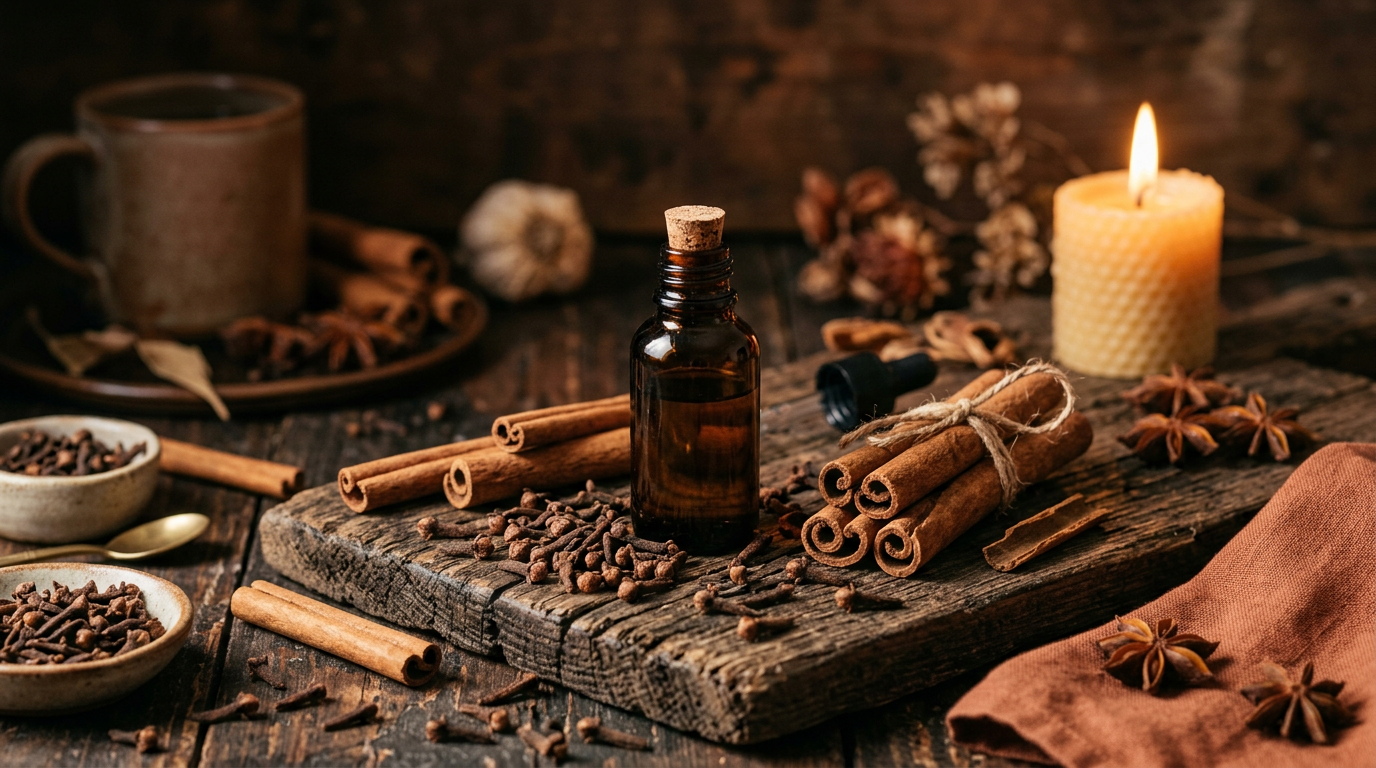
Cloves in Victorian Holiday Traditions: Spice, Garlands, and Gifts
There is something about the scent of cloves in December that feels almost like a memory, even if you have never made a pomander in your life. That warm, sharp sweetness seems to belong to winter the way pine boughs and candlelight do. It turns out, that feeling has roots. Deep ones. The Victorians built entire seasonal rituals around the clove, and those traditions are having a genuine moment right now as more people look to slow down the holidays and fill their homes with something real rather than synthetic.
If you have been searching for historic holiday scents to anchor your own December rituals, you are in good company. Let's travel back to the parlors and markets of Victorian England, and then bring those ideas forward into your kitchen, your entryway, and your gift-wrapping table.
Why Victorian Holiday Traditions Feel So Relevant Right Now
We are living through a quiet revival of handmade, scent-forward holiday rituals. Search trends for pomander balls, spiced garlands, and clove-studded oranges spike every November and stay elevated through Epiphany. Social feeds fill with oranges bristling with cloves, simmering stovetop potpourri, and linen sachets tucked into wrapped parcels.
This is not nostalgia for nostalgia's sake. It is a practical response to holiday overwhelm. The Victorians understood something we are rediscovering: a home that smells extraordinary feels generous without requiring a single additional purchase. And cloves, whether whole, ground, or distilled into essential oil, remain one of the most affordable and historically rich tools for creating that atmosphere.
A Brief Portrait of the Victorian Spice Kitchen
By the mid-nineteenth century, cloves had traveled a long road to reach the British holiday table. They originated in the Maluku Islands (the Spice Islands) of what is now Indonesia, and their journey westward reshaped empires and trade routes. If you want the full story of how cloves moved from a remote volcanic archipelago into Victorian pantries, our deep dive on cloves and the spice trade covers the centuries of commerce, conflict, and cultivation involved.
By Victoria's reign, cloves were no longer the exclusive luxury they had once been. Dutch dominance over the clove supply had fractured over the preceding century. Prices had fallen enough that a middle-class household could afford to use cloves freely in seasonal cooking and decoration. That shift democratized holiday spice traditions across English society.
The Victorian kitchen at Christmas was a spice-forward place. Cloves went into mincemeat, mulled wine, Christmas pudding, and the small, sweet biscuits packed into gift boxes. Whole cloves were pressed into oranges. Clove-scented sachets were tucked into linens and gift parcels. The spice was everywhere, and it was intentional.
The Pomander: A Victorian Holiday Staple You Can Make Tonight
The clove-studded orange pomander is probably the most enduring Victorian Christmas cloves tradition, and it is remarkably simple to revive. Victorian households made them for practical and decorative reasons alike. A fresh orange studded with cloves and hung in a cool room would slowly dry over the season, releasing that signature warm-spice fragrance for weeks.
How to Make a Traditional Clove Pomander
- Choose your citrus. Thin-skinned oranges are easiest to work with. Clementines, small lemons, and limes all work beautifully for variation.
- Score the skin lightly with a toothpick or skewer if you want a precise pattern. Many Victorian examples show diagonal grids, spirals, and fleur-de-lis motifs.
- Press whole cloves into the skin, stem-end first. Pack them closely. The more coverage, the longer the fragrance and the better the fruit dries without molding.
- Roll the studded fruit in a mixture of ground cinnamon, ground ginger, and orris root powder (a fixative that slows scent release). This step was standard in Victorian recipes and genuinely extends fragrance life by weeks.
- Set in a cool, dry spot for two to four weeks, or hang immediately for a more rustic, fresh-citrus-and-clove scent that will evolve as it dries.
Tie finished pomanders with velvet ribbon in deep jewel tones. Victorian gift-givers wrapped them in tissue and tucked a sprig of dried rosemary alongside. The pomander was considered both a practical gift and a beautiful one.
Spiced Garlands: The Victorian Approach to Seasonal Decorating
Victorian holiday garlands were not the tinsel-and-plastic affairs of later decades. They were built from natural materials: dried citrus slices, whole spices, evergreen sprigs, seed pods, and dried rosehips. Cloves appeared in several ways.
Some garland makers strung whole cloves alongside dried cranberries and cinnamon sticks on heavy thread or wire. Others tucked small muslin sachets of ground cloves between evergreen clusters so the heat of candles or a nearby fire released waves of spice throughout the evening. The effect was layered and deeply atmospheric.
A Simple Spiced Garland for a Modern Mantel
- Dry orange and lemon slices in a low oven (around 200°F) for three to four hours.
- String dried citrus, cinnamon sticks, star anise, and clusters of whole cloves on heavy natural twine.
- Add small sprigs of dried eucalyptus or preserved cedar for greenery.
- Optional: place a few drops of clove essential oil on small terra cotta disc ornaments and tuck them into the garland. Refresh every few days.
This garland keeps for the entire season and can be composted afterward. It costs very little and smells like a Victorian apothecary in the best possible way.
Cloves as Gifts: The Victorian Language of Spice
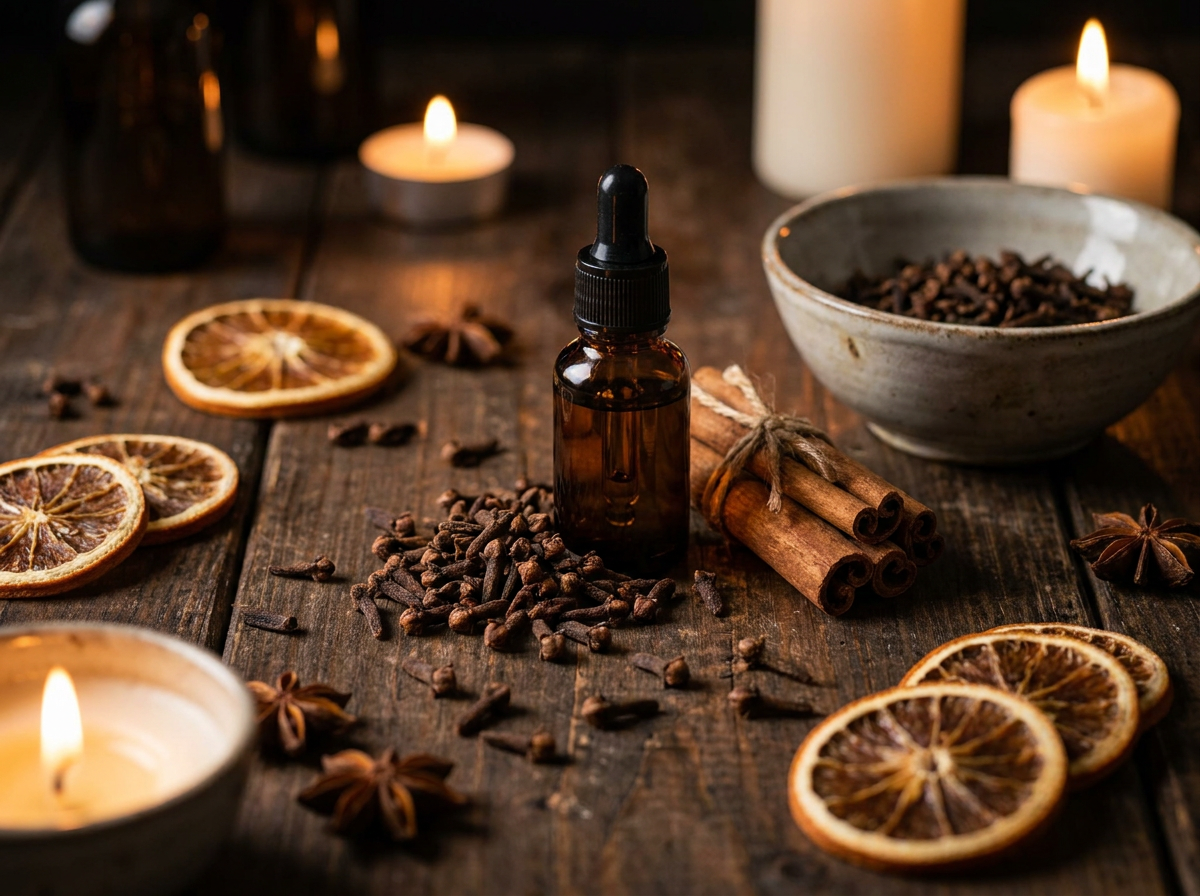
Gift-giving in the Victorian era carried a great deal of symbolic weight. Spices, including cloves, were part of that language. A packet of fine whole cloves was a considered present, communicating care and practicality. Cookery books of the period frequently describe gift boxes assembled for friends and neighbors: small quantities of cloves, mace, and nutmeg wrapped in paper and sealed with wax.
The trade routes that made those gifts possible were shaped by centuries of European competition for control of the Spice Islands. That history is darker and more complex than a Victorian Christmas card would suggest. Our piece on the Dutch spice monopoly unpacks exactly how cloves became so contested, and why the spice's arrival in British homes by the 1800s represented the end of a long, often violent chapter in global commerce.
Today, gifting quality whole cloves or a bottle of pure clove essential oil carries some of that thoughtful-practical spirit forward. Look for oils sourced from Zanzibar, Madagascar, or Indonesia with clear documentation of origin and steam distillation. A small amber bottle of bud oil alongside a card explaining its history makes a genuinely memorable gift for anyone who loves to cook, bake, or build a slow-scented home.
Mulled Wine and Wassail: The Clove in Victorian Holiday Drinks
No Victorian holiday table was complete without a hot spiced drink. Mulled wine and wassail both relied heavily on whole cloves as a foundational flavoring element. Victorian wassail recipes, which often used cider or ale as a base, call for cloves alongside mace, ginger, and nutmeg in quantities that feel almost extravagant by modern standards.
A simple Victorian-inspired mulled cider for a cold evening:
- 1 quart fresh apple cider
- 8 to 10 whole cloves
- 2 cinnamon sticks
- 3 to 4 allspice berries
- 1 orange, sliced into rounds
- A few strips of fresh orange peel
Combine everything in a heavy pot. Simmer gently on the lowest heat for at least thirty minutes. Do not boil. The cloves will mellow and deepen as they steep, moving from sharp to something rounder and warmer. Serve in heavy mugs with a fresh cinnamon stick.
The act of simmering spices on the stove is itself a Victorian ritual worth reviving. The whole house fills with those historic holiday scents within minutes. No candle or diffuser blend quite replicates the real thing.
Cloves in Folklore and Cultural Traditions Beyond England
The Victorian English were not the only culture to weave cloves into winter celebrations. Across Europe, the Middle East, and parts of Southeast Asia, cloves appear in seasonal foods, ritual objects, and protective customs dating back centuries before Queen Victoria's time. Our article on clove folklore and customs from around the world traces those regional traditions and shows how widely this single spice traveled through human ceremony.
Understanding that broader context makes the Victorian holiday table feel less like a museum piece and more like one chapter in a very long, very fragrant story.
Bringing It All Together: Your Victorian-Inspired Holiday Ritual
You do not need a parlor or a scullery maid to bring these traditions home. You need an afternoon, a bag of whole cloves, some citrus, and the willingness to slow down for a few hours.
Start with one element. Make a single pomander while a pot of spiced cider simmers on the stove. Hang the pomander near a window where the cold air will help it set. Come back next weekend and string a simple garland. By the time December 25th arrives, your home will have built up layers of scent and handwork that no store-bought decoration can replicate.
The Victorians understood the value of a home that engaged all the senses during the darkest weeks of the year. The holiday spice traditions they cultivated were deliberate and cumulative. Each small ritual added to a whole that felt genuinely celebratory.
Cloves were at the center of it. They still can be.
A Quick Reference: Victorian Clove Uses at a Glance
| Tradition | Victorian Form | Modern Adaptation |
|---|---|---|
| Pomanders | Clove-studded orange, dried over weeks | Fresh or dried, with velvet ribbon, as gifts or decor |
| Spiced garlands | Strung spices, muslin sachets, evergreens | Dried citrus and clove garlands on natural twine |
| Gift giving | Paper-wrapped whole spice packets | Quality clove essential oil with sourcing notes |
| Hot drinks | Wassail, mulled wine, spiced ale | Simmered spiced apple cider on the stovetop |
| Linen sachets | Ground cloves in muslin, tucked into gifts and drawers | Small linen pouches with whole cloves and dried lavender |
Each of these traditions is achievable, affordable, and genuinely rooted in history. That combination is rare. Use it.