
Clove Oil vs Nutmeg Oil: Comparing Two Warm Holiday Spice Notes
Ask anyone who has simmered a pot of mulled cider on the stove and they will tell you: clove and nutmeg are the backbone of a cozy season. Both are warm spice essential oils pulled from trees that grow half a world away from most of our kitchens, and both show up in everything from holiday candles to grandma's pie crust. But when you are standing in front of two amber bottles trying to decide which one belongs in your diffuser tonight, the clove oil vs nutmeg oil question gets more specific than "they both smell like Christmas." They come from different parts of the plant, they carry different intensity, and they behave differently once you start blending. This guide walks through the honest differences, so whether you are furnishing a candle studio or just want your living room to smell like a spice market in December, you know exactly what you are buying.
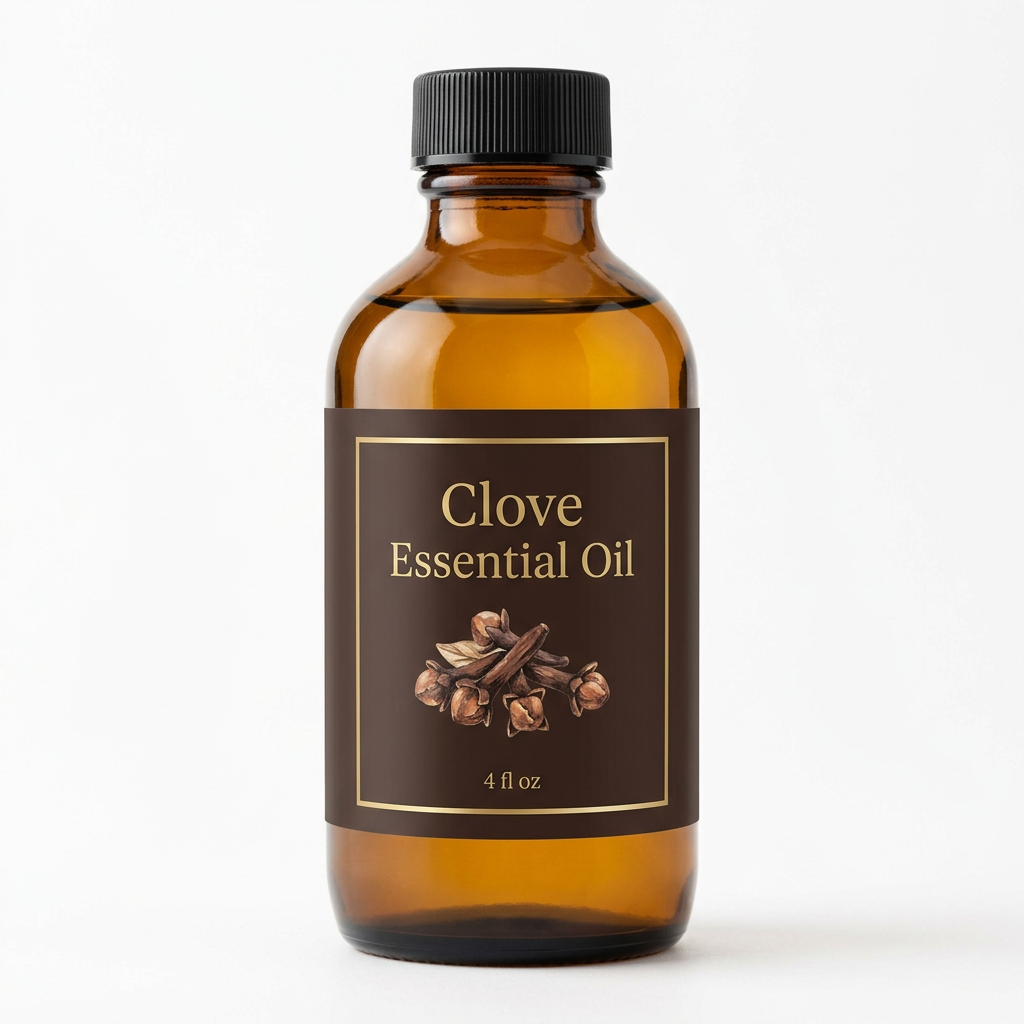
Clove Essential Oil
Our own Clove Essential Oil, in sizes from 0.5 oz to bulk.
From $9.05
Shop Now →Where Each Oil Comes From
Clove essential oil is steam distilled from the dried flower buds of Syzygium aromaticum, a tree native to Indonesia's Maluku Islands, the original Spice Islands that European traders sailed around the globe to reach. Most of the clove oil on the market today still comes from Indonesia, Madagascar, and Sri Lanka, and the buds are typically hand harvested before the flowers open, then sun dried before distillation. Some producers also distill clove leaf or clove stem, which are cheaper but noticeably rougher and less rounded in scent than bud oil, so it is worth asking your supplier which part of the plant they used.
Nutmeg essential oil is steam distilled from the seed of Myristica fragrans, a tree that also traces back to the same Indonesian archipelago, though today Grenada, Sri Lanka, and India supply a large share of the world's crop. The nutmeg seed sits inside a fruit, wrapped in a lacy red membrane that becomes the separate spice mace, and the seed itself is dried and cracked before distillation. A quality nutmeg oil will list the seed as its source, since some cheaper versions are cut with mace oil or lower grade seed fragments.
Reputable sellers of either oil should be able to tell you the harvest region, the plant part, and roughly when the batch was distilled. If a supplier cannot answer those basics, that is worth noting before you buy.
Scent Profile: What Each One Actually Smells Like
This is where the two oils really part ways, and it matters more than the botanical trivia when you are deciding what to buy.
Clove oil is bold, hot, and a little sharp at first sniff. It carries a deep, almost smoky sweetness underneath, and a small drop goes a long way. People often describe it as the spice that smells like biting into a whole clove by accident: intense, slightly medicinal in the classic "old apothecary" sense, and undeniably wintry. It is the note that makes mulled wine smell like mulled wine.
Nutmeg oil is softer and rounder. It has a warm, slightly sweet, almost woody quality with a hint of citrus brightness underneath, more like fresh grated nutmeg over eggnog than a spice rack straight up. It blends into the background more easily and reads as cozy rather than sharp, which is part of why it shows up so often in bakery-style candle blends.
If you want one word for each: clove is the spice that announces itself, and nutmeg is the spice that makes everything else smell finished.
Side-by-Side Comparison Table
| Attribute | Clove Essential Oil | Nutmeg Essential Oil |
|---|---|---|
| Botanical source | Dried flower bud of Syzygium aromaticum | Dried seed of Myristica fragrans |
| Primary growing regions | Indonesia, Madagascar, Sri Lanka | Grenada, Indonesia, Sri Lanka, India |
| Scent intensity | Very strong, hot, sharp | Moderate, soft, rounded |
| Scent character | Spicy, smoky-sweet, warming | Sweet, woody, faintly citrusy |
| Typical drops per diffuser use | 1 to 2 drops | 3 to 5 drops |
| Common blend partners | Orange, cinnamon bark, cedarwood | Cinnamon leaf, sweet orange, vanilla-type absolutes |
| Skin sensitivity level | High; a known skin irritant even in small amounts | Moderate; still requires careful dilution |
| Best application | Diffusion, candle and soap fragrance, potpourri | Diffusion, baking-scented candles, room sprays |
| Typical cost per 10ml (2026 market) | $8 to $14 for bud-grade oil | $10 to $16 |
| Shelf life once opened | 2 to 3 years, store away from light and heat | 2 to 3 years, store away from light and heat |
Clove Oil: Pros and Cons
Pros
- Unmistakable, festive scent that reads as "holiday spice" faster than almost any other note
- Small amounts stretch far, so a single bottle lasts a long time in diffuser blends
- Long history in spice trade lore, which makes it a fun storytelling ingredient for candle and soap labels
- Pairs beautifully with citrus and cedar for a grown-up, less-sweet holiday blend
Cons
Nutmeg Oil: Pros and Cons
Pros
- Softer, more forgiving scent that is easy to layer into blends without overpowering other notes
- Reads as "cozy bakery" rather than "spice cabinet," which broadens what it pairs well with
- Works well in both dessert-style and traditional holiday blends
- Generally milder on skin than clove, though it still calls for proper dilution
Cons
Best For: Matching the Oil to the Use Case
Neither oil is the universal answer, and honestly that is the fun of working with a spice cabinet worth of scent options. Here is how we would point different projects.
Best for holiday candle making
Nutmeg oil, paired with a cinnamon leaf and a touch of sweet orange, gives a rounder, bakery-adjacent scent that holds up well in soy wax. Clove works too, but use it sparingly as an accent note rather than the base.
Best for a bold, traditional spice-market diffuser blend
Clove oil, blended with orange and a whisper of cedarwood. This is the combination that smells like a winter market stall, and it needs the sharpness that only clove brings.
Best for soap and cold-process projects
Clove holds its scent through the saponification process better than many spice oils, which soapmakers appreciate, though its sensitivity profile means it should be used at conservative percentages and always patch tested in the finished bar.
Best for a gentler room spray or linen mist
Nutmeg oil, diluted well, gives a softer background warmth that will not clear a room the way an overzealous clove spray can.
Best for gift sets and sampler collections
Both. A clove or nutmeg essential oil pairing makes an easy, genuinely useful gift set for anyone who bakes or diffuses through the winter, and letting the recipient choose which one to reach for first is part of the appeal.
A Word on Grade and Sourcing Honesty
Here is the part a lot of comparison guides skip: not all clove or nutmeg oil sold under the same name is really comparable. Clove bud oil, clove leaf oil, and clove stem oil are chemically different enough to smell different, and only bud oil delivers that rich, rounded warmth people expect. Nutmeg oil compared to clove oil, the grading question shows up differently: nutmeg is more often diluted or cut with mace oil to stretch a batch, since true single-origin seed oil costs more to produce. When you are comparing two bottles at similar prices, ask the seller directly which plant part was distilled and where the harvest came from. A supplier who cannot answer is telling you something, even if they do not say it outright.
Using Either Oil Safely at Home
Both of these oils are potent, and "a little goes a long way" is not just a marketing phrase here. A few practical notes before you start blending:
- Always dilute before any skin contact. A common starting ratio for spice oils like these is 0.5 to 1 percent in a carrier oil, meaning roughly 3 to 6 drops per ounce of carrier, and clove in particular is often kept even lower given its higher sensitivity profile.
- Do a patch test on a small area of skin and wait 24 to 48 hours before wider use, especially with clove.
- Keep both oils away from the eyes and mucous membranes.
- Store bottles tightly capped, away from direct light and heat, to preserve scent quality over time.
- If you are pregnant, nursing, or managing any ongoing health matter, check with a qualified healthcare provider before introducing a new essential oil into your routine.
- Keep essential oils out of reach of children and pets.
These are aromatic oils intended for scenting the home, candles, soap, and personal care projects, not a substitute for professional guidance on any health matter.
The Verdict
If we had to send you home with one bottle tonight, the honest answer depends on what is already in your cart. For a diffuser blend that instantly says "holiday market," clove oil wins on character alone, its intensity is exactly what makes it memorable, and a couple of drops mixed with orange will carry a whole room. For candle making, baking-inspired blends, or anything meant to sit gently in the background of a space, nutmeg oil is the more forgiving, more versatile pick, and it plays nicer with a wider range of other notes.
In this warm spice essential oil comparison, we would not call either one a runner-up. They are built for different jobs. Our own shelf keeps both on hand: clove for the bold, market-stall moments, nutmeg for the quiet, cozy-kitchen ones. If you only have room for one bottle this season and your priority is a scent that reads as unmistakably festive with the smallest amount of product, reach for clove. If you want a blend that layers easily into everything else you already own, nutmeg is the safer bet. Either way, buy from a source that will tell you the plant part and the harvest region without you having to ask twice. That transparency is the real marker of a spice oil worth keeping in rotation year after year.