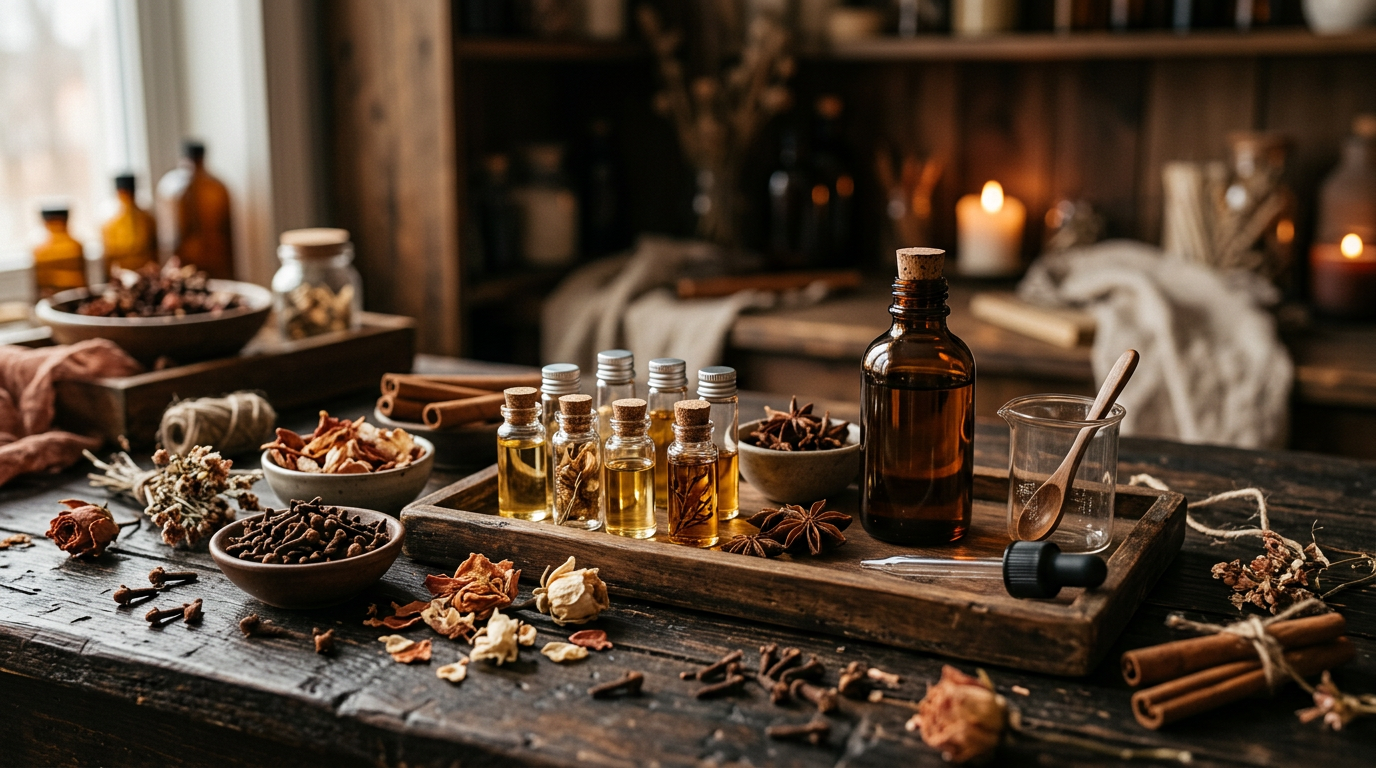
Clove Oil in Perfumery: Building a Spicy Base Note at Home
There is a moment in every spice market, somewhere between the burlap sacks and the wooden scoops, when the air becomes almost edible. Clove is usually responsible. That deep, resinous warmth has been threading its way through trade routes and perfume houses for centuries, and for good reason: clove oil anchors a fragrance the way a fireplace anchors a room. It grounds everything around it while radiating a quiet heat of its own.
Building a clove oil perfume at home is more approachable than most people expect. You do not need a professional lab or a collection of hundreds of materials. What you do need is a little patience, some good-quality ingredients, and an understanding of how base notes work and why clove is one of the most rewarding ones to learn with.
Why Clove Works So Well as a Base Note
In perfumery, fragrances are typically described in three layers: top notes (the first impression, bright and fleeting), heart notes (the body of the scent, emerging after a few minutes), and base notes (the foundation, slow to develop and long-lasting on skin). A base note does the heavy lifting. It extends the life of the blend and gives it weight.
Clove oil sits comfortably in the base-to-heart transition zone. Its primary aromatic compound, eugenol, is dense and slightly medicinal in isolation, but in a blend it softens into something genuinely luxurious. It has good tenacity, meaning it clings to skin and fabric longer than lighter materials. It also acts as a fixative of sorts, helping to slow the evaporation of the more volatile notes layered on top of it.
For anyone exploring blending with clove oil for the first time, its behavior in a base note context is a wonderful entry point. It is expressive without being chaotic, and it plays well with a wide range of companion materials.
Materials and Ingredients You Will Need
Before you start measuring, gather everything in one place. Perfume blending rewards preparation.
Essential Oils and Aroma Materials
- Clove bud essential oil (not clove leaf or clove stem, which tend to be harsher): 1 to 3 drops to start
- A woody base partner: cedarwood (Virginian or Atlas), sandalwood, or vetiver work beautifully
- A sweet or balsamic modifier: vanilla absolute, benzoin resinoid, or labdanum absolute
- A heart note bridge: ylang ylang, rose absolute, or cardamom to connect your base to any top notes you choose later
- A citrus or green top note (optional for a complete trial blend): sweet orange, bergamot, or pink pepper
Carrier and Dilution Materials
- Perfumer's alcohol (ethanol-based, ideally 190-proof or a dedicated perfumer's grade): 10 ml to start
- Fractionated coconut oil or jojoba oil if you prefer an oil-based perfume
- A small glass mixing vial or beaker (5 to 10 ml)
- Pipettes or a calibrated dropper
- Perfume blotter strips (also called test strips or smelling strips)
- Labels and a pen for notes
- A dedicated notebook for recording every drop
A Note on Clove Oil Grade
Source your clove bud oil carefully. Clove leaf oil is significantly cheaper but has a coarser, more abrasive character that can overwhelm a blend. Clove bud oil is gentler, rounder, and more complex. Look for suppliers who disclose the country of origin (Madagascar, Sri Lanka, and Indonesia are the primary producers) and provide GC/MS testing data, which verifies the oil's composition and purity.
Understanding Dilution and Safety Before You Begin
Clove bud oil is considered a sensitizing material by the International Fragrance Association (IFRA). This means it requires careful dilution, and skipping this step is the single most common mistake new home perfumers make.
Safety Note: For a leave-on skin application such as a perfume, IFRA guidelines recommend keeping clove bud oil at or below approximately 0.5% of the finished formula. In a 10 ml bottle, that translates to roughly 1 drop of clove bud oil. Always perform a patch test on a small area of skin before wearing a new blend. If you experience any irritation, discontinue use immediately. Those who are pregnant, nursing, or have sensitive skin should consult a qualified healthcare provider before working with clove oil or applying any new fragrance.
For a rinse-off product or a room spray, the allowable concentration is higher, giving you more flexibility. But for a skin-worn perfume, respect the limit. The good news is that clove oil is so potent that a single drop carries enormous aromatic impact. You do not need much.
Step-by-Step: Building Your Spicy Perfume Base Note

The process below produces a small trial batch of approximately 10 ml, which is enough to evaluate the blend and make adjustments. Think of this as a sketch, not a finished painting.
-
Step 1: Build the Base Foundation First
Start with your woody base partner. If you are using cedarwood, add 4 drops to your empty vial. If you are using a thicker material like vetiver, start with 2 drops. Base notes often need the most time to open up, so placing them first gives you a reference point for everything you add on top.
Wave the open vial under your nose without putting it directly against your skin. Write down your first impression. Cedar at this stage might smell like a pencil sharpener, which is normal. It will change.
-
Step 2: Add the Sweet Modifier
Add 2 drops of vanilla absolute or benzoin resinoid. These materials act as rounders, softening sharp edges and adding a creamy depth that will eventually support the clove beautifully. Swirl the vial gently. Smell again on a blotter strip. You should notice the cedar becoming warmer.
-
Step 3: Introduce the Clove
This is the step that most people rush. Add only 1 drop of clove bud oil to your vial. One drop. Swirl and smell on a fresh blotter strip. Give it 30 seconds before reaching any conclusions, because clove needs a moment to integrate.
What you are looking for is a sense of warmth and depth arriving behind the cedar and vanilla. The clove should feel like it belongs, not like it is announcing itself at full volume. If the blend smells balanced and interesting at this stage, you have a working base. If it feels flat, you can consider adding a second drop in your next iteration, but never in this same trial vial.
This is the heart of what makes a great clove and cedarwood blend work so well: the proportions respect each material rather than letting any single one dominate.
-
Step 4: Add the Heart Note Bridge
Add 2 drops of cardamom or ylang ylang. Cardamom is particularly sympathetic to clove because they share a spice-market lineage. Ylang ylang brings a floral softness that prevents the blend from feeling one-dimensional. Smell the blend again, this time letting the strip dry for a full minute before assessing.
-
Step 5: Dilute into Perfumer's Alcohol
Once you are satisfied with the concentrate (your total drop count across all materials), transfer it into a clean 10 ml vial and top up with perfumer's alcohol. For a parfum concentration, aim for a ratio of roughly 20 to 30 percent concentrate to alcohol. For an eau de parfum, go closer to 15 to 20 percent. For an eau de toilette, 8 to 12 percent works well.
Seal the vial and give it a gentle shake. Then put it away. Do not evaluate it yet.
-
Step 6: Let It Macerate
Maceration is the resting period during which the fragrance molecules marry and the alcohol integrates. Store your vial in a cool, dark place for a minimum of 48 hours. One week is better. Two weeks is better still. Many home perfumers find that a blend smells almost unrecognizable after two weeks of maceration compared to day one, and usually in a very pleasant direction.
Resist the urge to open it constantly. Check it at 48 hours, then at one week, and take notes each time.
-
Step 7: Evaluate and Adjust
After maceration, apply a small amount to your inner wrist. Smell immediately (this is the top note impression, which in your blend may just be the alcohol burn plus a flash of citrus if you added any). Wait 10 minutes and smell again. This is the heart emergence. Wait another 30 to 60 minutes and smell a third time. This is where your clove base note should be doing its best work: warm, persistent, and quietly spicy.
Take detailed notes. If the clove feels too forward, your next iteration should use slightly less. If the vanilla is dominating in an unpleasant way, reduce it next time. Perfumery is iterative by nature. Every batch teaches you something.
Tips for Getting the Most from Clove in a Spicy Perfume Blend
Pair Thoughtfully
Clove oil perfume blends tend to work best when the other materials are in a similar aromatic family or provide deliberate contrast. Warm partners like patchouli, oud, and ambrette seed deepen the resinous quality. Bright contrasts like bergamot, black pepper, or grapefruit add an unexpected lift that keeps the blend from feeling heavy. For a cozy, enveloping signature, a clove and vanilla blend is one of the most satisfying directions you can take.
Work on Paper First
Before committing to a vial, smell your materials on separate blotter strips and hold them together at different distances. This gives you a rough preview of how they might interact. It is not perfectly accurate, but it helps you avoid obvious clashes before wasting materials.
Label Everything
Write the date, every ingredient, and every drop count on your vial label before you even start blending. Memory is unreliable in a blending session, and your best batch will always be the one you cannot remember how to reproduce if you do not write it down.
Keep Clove in Its Lane
Clove oil is a supporting character in most blends, even when it is a base note anchor. Reaching for a second or third drop because you cannot smell it prominently in the concentrate is a trap. In alcohol, diluted and macerating, it will come forward significantly. Trust the process.
Common Mistakes to Avoid
| Mistake | Why It Happens | How to Avoid It |
|---|---|---|
| Using too much clove | Clove smells modest in the bottle but is potent in a blend | Start with 1 drop and evaluate after full maceration |
| Skipping maceration | Impatience; the fresh blend smells off and discouraging | Commit to a minimum 48-hour rest before evaluating |
| Choosing clove leaf instead of clove bud | Price difference is appealing | Source clove bud oil specifically; label-read carefully |
| Skipping the patch test | Eagerness to wear the finished product | Always patch test on inner arm; wait 24 hours before full application |
| Not recording measurements | Blending feels intuitive in the moment | Write down every drop before adding it, not after |
What to Expect from Your Finished Blend
A well-constructed clove oil perfume built on the process above may develop into something genuinely complex. People who wear spicy perfume blends of this kind often report a sense of warmth and ease that fits naturally into autumn and winter routines, though there is nothing stopping you from wearing it year-round as a personal signature.
The diy perfume base notes you have built will likely last several hours on skin, longer on fabric. Clove's tenacity means the dry-down (the final phase of a fragrance as it fades) can stay interesting for a long time. The vanilla or benzoin you added early in the process will come forward in the dry-down, creating a softer, sweeter finish than the initial spice-forward opening might suggest.
Every nose is different. Every skin chemistry is different. What smells one way on a blotter strip will shift on your wrist, and shift again on someone else's. That variability is part of what makes home perfumery so absorbing. You have built something that is, in a very real sense, calibrated to you.
Keep your notes, keep your vials, and keep blending. The spice trade has been running for thousands of years on the back of that single, extraordinary clove bud. Your kitchen table is as good a place as any to continue the tradition.