What Is Clove Oil? A Complete Beginner's Guide
If you've ever pressed a whole clove between your fingers and caught that warm, almost peppery-sweet smell, you already know something about clove oil before you've opened a single bottle. It's one of the oldest aromatics in the spice trade, tucked into ships' holds long before it ever showed up in a glass dropper bottle on a bathroom shelf. This guide walks through what clove oil actually is, where it comes from, how it's made, and what a curious beginner should know before bringing a bottle home.
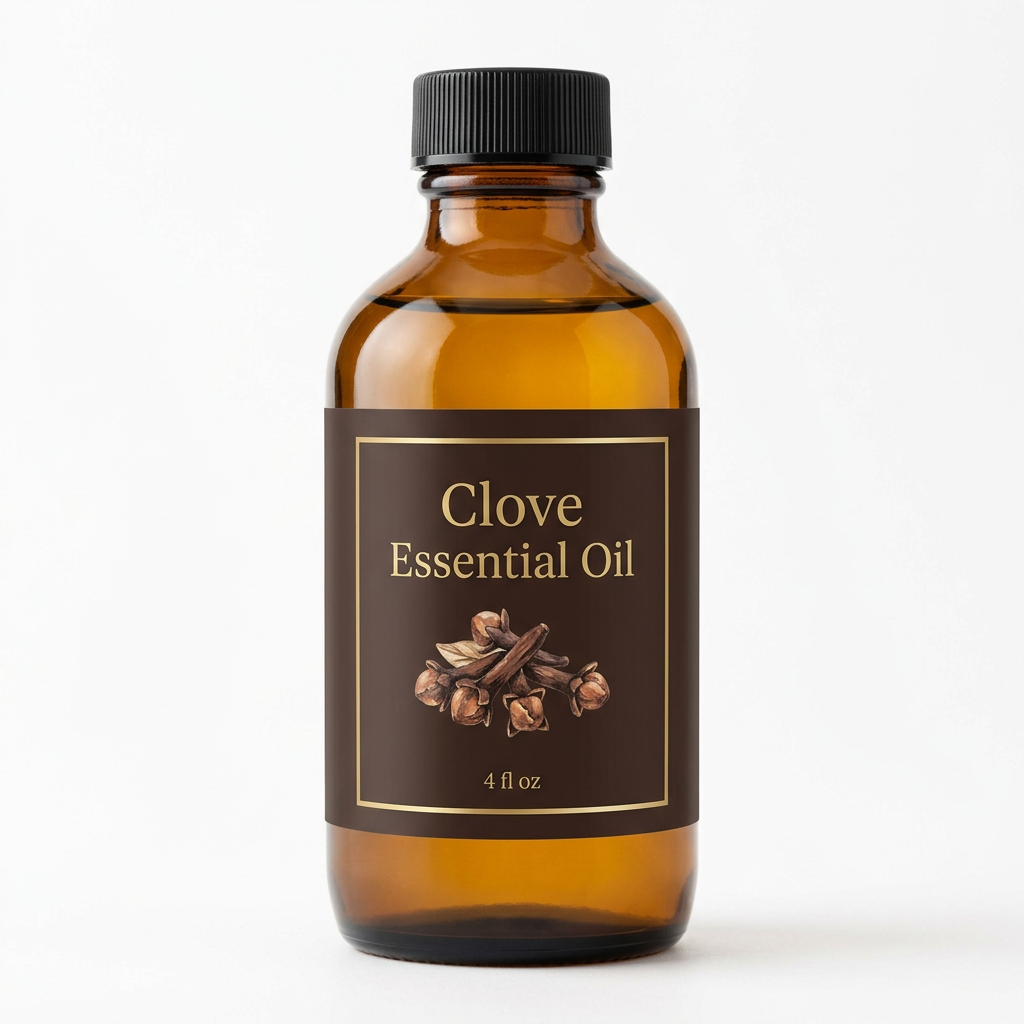 Clove Essential Oil
Our own Clove Essential Oil, in sizes from 0.5 oz to bulk. From $9.05.
Shop Now →
Clove Essential Oil
Our own Clove Essential Oil, in sizes from 0.5 oz to bulk. From $9.05.
Shop Now →
Table of Contents
- What Is Clove Oil, Exactly?
- Where Clove Oil Comes From
- How Clove Oil Is Made
- Clove Bud, Leaf, and Stem Oil: What's the Difference?
- What Clove Oil Smells Like and Why
- Traditional and Everyday Uses
- Safety, Dilution, and Storage Basics
- Choosing a Quality Bottle
Key Takeaways
- Clove oil is steam-distilled from the flower buds, leaves, or stems of the clove tree, an evergreen native to the Maluku Islands of Indonesia.
- Bud, leaf, and stem oils come from the same plant but differ in aroma strength, price, and traditional use.
- The oil's warm, spicy scent comes largely from a naturally occurring compound called eugenol.
- Clove oil is highly concentrated and should always be diluted before it touches skin.
- This article is educational. It does not offer medical guidance, and you should talk with a qualified healthcare provider before adding any new botanical to your routine.
What Is Clove Oil, Exactly?
Clove oil is an essential oil, meaning it's a concentrated aromatic liquid captured from a plant through distillation rather than pressed, brewed, or infused. When people ask what clove oil explained in plain terms actually means, the short answer is this: it's the volatile, fragrant essence of the clove plant, separated from the plant material and bottled on its own.
The clove tree, botanically Syzygium aromaticum, produces small flower buds that are hand-picked while still unopened, then dried in the sun until they turn the familiar dark brown color you'd recognize from a spice rack. Those dried buds are the "cloves" used in cooking. Clove oil is what you get when those buds, or sometimes the tree's leaves and stems, go through steam distillation instead of ending up in a spice jar.
For anyone building a foundational clove essential oil guide in their own head, the plant family context helps too. Clove belongs to the Myrtaceae family, the same botanical family as eucalyptus and tea tree. That family tends to produce aromatic, resin-rich plants, and clove is one of its most concentrated members. A little goes a long way, which is part of why bottles are often sold in small sizes compared to lighter florals.
Where Clove Oil Comes From
The clove tree's story starts in the Maluku Islands, once known as the Spice Islands, in what is now eastern Indonesia. For centuries this small archipelago held a near-monopoly on clove production, and the spice was valuable enough to shape trade routes, fund expeditions, and occasionally start wars between competing European powers.
Today, clove trees are grown far beyond their original island home. Madagascar and Indonesia are now the world's leading producers, with Sri Lanka, Tanzania (especially the island of Zanzibar), and Comoros also contributing meaningful volume to the global market. Zanzibar in particular built much of its colonial-era economy around clove exports, and the crop remains culturally significant there.
Growing region matters more than most beginners expect. Soil, elevation, rainfall patterns, and harvest timing all influence the concentration of aromatic compounds in the finished buds, which in turn shapes the character of the distilled oil. A distiller sourcing from a single well-managed estate can usually speak to harvest conditions in a way that a blended, multi-origin batch cannot.
How Clove Oil Is Made
Almost all clove oil on the market is produced through steam distillation, a method that has changed surprisingly little over the centuries even as the equipment has modernized.
Here's the general process:
- Harvest. Clove buds are picked by hand before they flower, then dried in the sun for several days until moisture content drops and the buds harden.
- Loading. Dried buds (or, for other oil types, leaves or stems) are packed into a distillation chamber.
- Steaming. Pressurized steam passes through the plant material, gently coaxing the volatile aromatic compounds out of the plant tissue.
- Condensation. The steam, now carrying those aromatic compounds, travels through a cooling system and condenses back into liquid form.
- Separation. Because oil and water don't mix, the condensed liquid naturally separates into essential oil on one layer and a byproduct called hydrosol (or floral water) below it. The oil is skimmed off, filtered, and bottled.
The whole cycle, from picking to bottling, can take anywhere from a single season on a small family plot to a much longer, more industrial timeline on a large estate. Distillation time itself typically runs several hours, since clove's dense, woody plant material releases its oil more slowly than something delicate like lavender.
Clove Bud, Leaf, and Stem Oil: What's the Difference?
One thing that trips up a lot of newcomers is realizing clove oil isn't a single, uniform product. The same tree yields three distinct oils depending on which part gets distilled, and they are not interchangeable.
| Type | Plant Part | Typical Character | Common Market Position |
|---|---|---|---|
| Clove Bud Oil | Unopened flower buds | Rounder, warmer, considered the most refined of the three | Highest grade, higher price point |
| Clove Leaf Oil | Dried leaves | Sharper, more one-dimensional spice note | Mid-range, widely available |
| Clove Stem Oil | Stems and small twigs | Woody, slightly harsher edge | Least common, often used in industrial blending |
Bud oil is generally regarded by distillers and hobbyists alike as the premium grade, largely because the buds themselves carry the plant's most concentrated and best-balanced aromatic profile. Leaf oil is a practical, budget-friendly option and shows up often in candle making and home fragrance projects. Stem oil is the least refined of the three and tends to stay within industrial or fragrance-manufacturing supply chains rather than reaching consumer shelves directly.
When a label just says "clove oil" without specifying bud, leaf, or stem, that's worth asking about. A straightforward label is one of the simplest signs of a distiller who's being upfront about sourcing.
What Clove Oil Smells Like and Why
Clove oil's scent is instantly recognizable: warm, spicy, faintly sweet, with a peppery bite underneath. If you've smelled a pomander studded with whole cloves at the holidays, or the spice blend in a mulled cider, you've smelled this profile before.
That signature aroma comes primarily from a naturally occurring aromatic compound called eugenol, which can make up a large percentage of the oil's total composition, particularly in bud oil. Eugenol is also found in smaller amounts in cinnamon, nutmeg, and bay leaf, which is part of why those spices blend so naturally together in seasonal recipes and diffuser blends. Beyond eugenol, clove oil carries smaller amounts of other aromatic compounds that round out its complexity and give bud, leaf, and stem oils their slightly different personalities.
In a diffuser blend, clove oil tends to act as a grounding base note, the kind of scent that anchors lighter citrus or floral top notes and gives a blend some staying power. A drop or two goes a long way here too; undiluted, its aroma can quickly overpower a room.
Traditional and Everyday Uses
Clove has a long history in kitchens, apothecaries, and home rituals across many cultures, well before it was ever bottled as an essential oil. Whole cloves have flavored curries, pickling brines, and spiced wines for centuries. In home fragrance circles today, clove oil is traditionally used for its warm, autumnal scent profile, often blended into seasonal candles, potpourri, and diffuser recipes alongside cinnamon, orange, and cedarwood.
Some people incorporate a well-diluted clove oil blend into a DIY wood polish or a simmer pot recipe for its scent alone, appreciating the cozy, spice-market atmosphere it brings to a room during the colder months. Anecdotal evidence suggests many home crafters favor clove oil in seasonal candle and sachet projects specifically for how long its scent lingers compared to lighter aromatics.
It's worth being clear-eyed about the limits of this kind of information. This article is describing how people traditionally use and enjoy clove oil in home and craft settings, not offering guidance on any particular outcome you should expect. If you're curious about incorporating clove oil into a personal routine, a conversation with a qualified healthcare provider is the right next step, especially if you're pregnant, nursing, or already working with a provider on something else.
Safety, Dilution, and Storage Basics
Because clove oil is so concentrated, a little caution goes a long way. Here are the basics every beginner should know:
- Always dilute before skin contact. Clove oil should never be applied undiluted. A common home-crafting guideline is to keep clove oil at or below a 1% dilution in a carrier oil (such as jojoba or sweet almond oil) for topical projects, roughly 6 drops of essential oil per ounce of carrier. Some crafters prefer to stay even lower given how potent clove oil is compared to gentler oils.
- Patch test first. Before using any new diluted blend more broadly, apply a small amount to a small area of skin, such as the inner forearm, and wait 24 to 48 hours to see how your skin responds.
- Keep it away from eyes and sensitive areas. Its intensity makes accidental contact with eyes or mucous membranes uncomfortable.
- Store it properly. Keep clove oil in a dark glass bottle, tightly capped, away from direct sunlight and heat. Proper storage helps preserve its aroma and quality over time.
- Keep out of reach of children and pets. Like all essential oils, clove oil should be stored securely and used only as intended for home fragrance and crafting purposes.
- Check with a qualified healthcare provider first. This is especially important if you are pregnant, nursing, managing an ongoing health situation, or currently taking any medication. Never replace guidance from a healthcare provider with information from an article like this one.
None of this is meant to be alarming. It's the same kind of care you'd take with a concentrated cleaning product or a strong essential oil of any kind: respect the concentration, dilute appropriately, and when in doubt, ask a professional.
Choosing a Quality Bottle
Not all clove oil on the market is created with the same care, and a few sourcing questions can help a beginner tell the difference between a thoughtfully produced bottle and a mass-market one.
Look for Clear Labeling
A trustworthy bottle should specify whether it's bud, leaf, or stem oil, name the botanical species (Syzygium aromaticum), and ideally note the country or region of origin. Vague labeling is often a sign that the source itself is a blend of unknown origins.
Ask About Purity
Quality producers can usually tell you whether an oil is sold undiluted (100% pure) or pre-diluted in a carrier, and many offer batch testing results, such as gas chromatography (GC/MS) reports, on request. This kind of transparency is a good sign that a distiller stands behind their sourcing.
Consider the Harvest Story
Because clove has such a rich trade history, many smaller distillers are happy to share where their buds are grown, how the harvest was handled, and what distillation method they used. A producer who can speak to these details in specifics, rather than generic marketing language, is usually one who's closer to the source.
Price as a Signal
Clove bud oil is generally more expensive than leaf or stem oil because of the more refined starting material and typically lower yield per batch. A price that seems unusually low compared to other bud oils on the market is worth a second look at the label.
Bringing It All Together
Clove oil carries centuries of spice-trade history in a single small bottle: island harvests, hand-picked buds, and a distillation process that hasn't changed all that much since it was first put to use. For a beginner, the most useful things to remember are simple. Know whether you're holding bud, leaf, or stem oil. Respect its concentration and dilute before it touches skin. Store it away from heat and light. And treat any bottle's label, or lack of one, as a clue about how much care went into what's inside.
From here, the natural next step for a curious beginner is learning how to build simple, well-diluted blends and seasonal rituals around clove oil, always with safety and proper sourcing as the starting point rather than an afterthought.