
How to Spot-Check Clove Oil Purity at Home Before You Buy More
Somewhere between the spice stalls of old Zanzibar and the dropper bottle on your kitchen counter, clove oil picked up a reputation problem. It's cheap to fake, easy to stretch with filler oils, and most buyers have no way to tell the difference until the bottle is nearly empty. If you've ever wondered is my clove oil pure, or paused mid-purchase wondering whether the bottle in your cart is worth reordering, you're asking the right question at the right time. Before you buy more of the same, it's worth spending fifteen quiet minutes at your kitchen table finding out what you actually have.
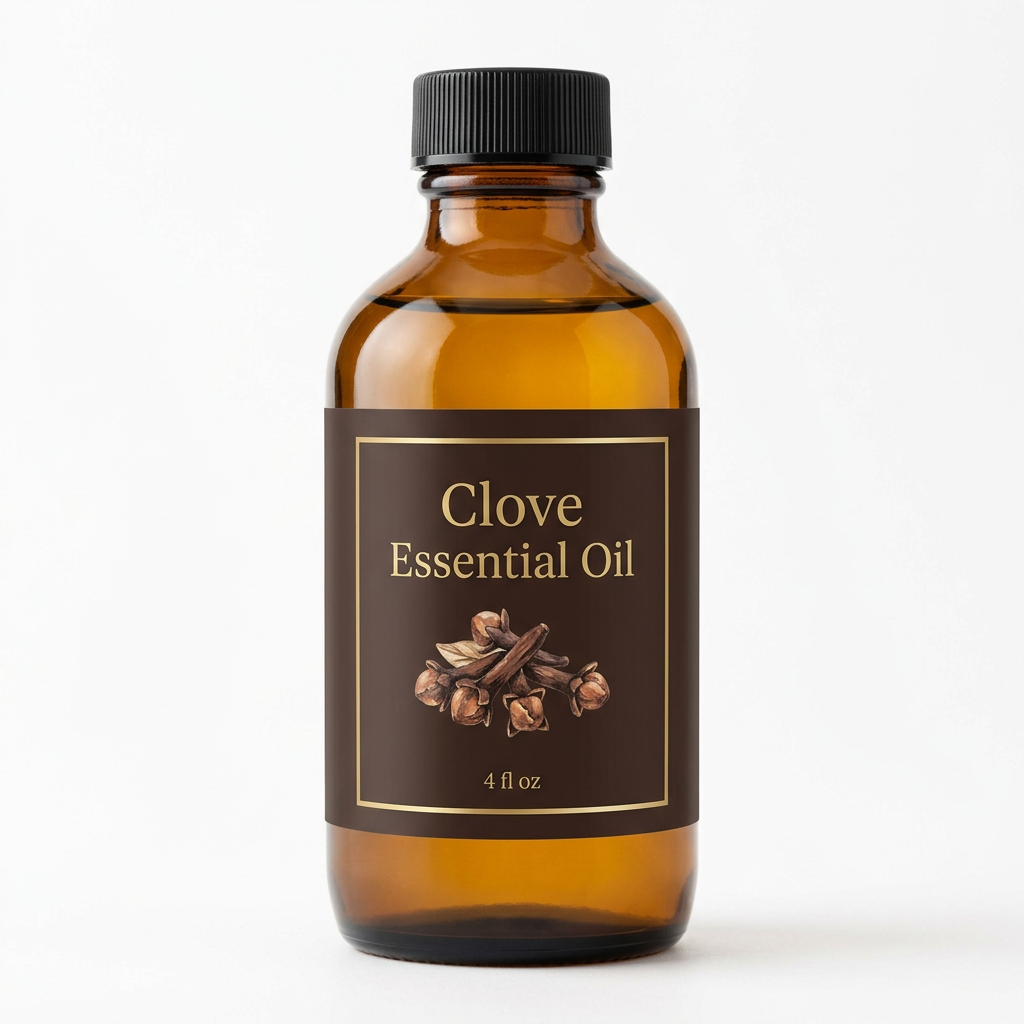
Clove Essential Oil
Our own Clove Essential Oil, in sizes from 0.5 oz to bulk.
From $9.05
Shop Now →None of what follows requires a lab coat or a chemistry degree. These are the same rough checks that spice traders and small-batch distillers have leaned on for generations: watch how the oil moves, how it smells over time, how it behaves on paper and in water. They won't give you a certificate. They will give you a much better sense of whether your bottle deserves a place in your seasonal rituals or a spot in the donation pile.
Why Purity Matters for Clove Oil
Pure clove oil is a concentrated extract, mostly eugenol, pressed or steam-distilled from the dried flower buds of Syzygium aromaticum. Because eugenol is genuinely valuable and clove buds are labor-intensive to harvest, clove oil has long been a target for stretching. Producers under pressure to hit a price point sometimes cut it with cheaper carrier oils, synthetic eugenol, or oils from the leaf and stem of the same plant, which smell similar but behave differently on skin and in a diffuser.
None of this means every inexpensive bottle is suspect. Grade, origin, and harvest year all affect price honestly. But a clove oil purity test at home gives you a baseline so you're not guessing blind every time you restock.
What You'll Need
- Your bottle of clove essential oil
- A clean glass of room-temperature water
- A strip of plain white paper or a coffee filter
- A white plate or saucer
- A carrier oil you trust (fractionated coconut oil or sweet almond oil work well) for the skin check later
- A notebook or your phone, to jot down what you observe
- Good natural light, ideally daylight rather than a warm bulb, which can distort color
That's the whole kit. Resist the urge to overcomplicate this. The point is pattern recognition, not laboratory precision.
Step-by-Step: How to Test Clove Oil Purity
Step 1: Read the Label Like a Buyer, Not a Browser
Before anything touches paper or water, check what the bottle actually says. Look for the botanical name (Syzygium aromaticum), the plant part used (bud, leaf, or stem), and the country of origin. Bud oil is the classic, higher-eugenol version most people picture when they think of clove; leaf and stem oils are legitimate products but carry a different scent profile and a lower price. If the label is vague, silent on plant part, or lists "fragrance oil" anywhere near the word clove, that's worth noting before you go further.
Step 2: The Paper Test (Evaporation Check)
Place one drop of oil on your white paper strip and let it sit undisturbed for twenty-four hours in a spot away from drafts and direct sun. Pure essential oils are volatile: they evaporate over time and typically leave little to no visible ring, or at most a faint, dry mark with no greasy halo. If your paper shows a persistent oily stain after a full day, especially one that spreads and stays translucent like cooking oil, that suggests a carrier oil or fixative was blended in.
Check back at the two-hour mark, the eight-hour mark, and the twenty-four hour mark. Pure clove oil's scent will fade in intensity but shouldn't disappear entirely by the next day; adulterated batches sometimes lose their scent much faster because the "clove" note was a lighter top layer sitting over something else.
Step 3: The Cold Water Swirl Test
Fill a clear glass with room-temperature water and add two or three drops of your oil. Watch what happens in the first thirty seconds, then again after a few minutes. Pure clove oil, being lipid-based and denser than most essential oils, will typically sit as small, mostly intact droplets or settle in wisps rather than fully dissolving. If the drops dissolve into a cloudy swirl that mixes evenly into the water, or if you see a rainbow sheen spreading across the surface, that can point to solvents or synthetic additives that pure oil wouldn't contain.
This test is a rough indicator, not a verdict on its own. Water behavior varies a bit by oil chemistry, so treat it as one data point among several rather than a single pass-fail check.
Step 4: The Color and Clarity Check
Hold your bottle up against a plain white background in natural daylight. Good quality clove bud oil typically ranges from pale yellow to a warm amber, sometimes deepening slightly with age or oxidation. It should be clear, not cloudy, and free of visible sediment or a separated layer at the top or bottom of the bottle. A very light, almost water-clear liquid, or one with an unusually deep reddish-brown tint, is worth a second look, especially compared against a previous bottle you know was reliable.
Step 5: The Viscosity and Pour Test
Tilt the bottle gently, or place one drop on the white plate and watch how it moves. Pure clove oil has a noticeably thin-to-medium viscosity, similar to light cooking oil, and drops should hold a loose bead rather than spreading instantly flat or running like water. If your oil pours suspiciously thin and fast, or feels distinctly thicker and stickier than you remember, something in the formulation has likely changed.
Step 6: The Scent-Layering Test
This one takes patience, but spice traders have relied on it for centuries. Put one drop on a paper strip and smell it at three intervals: immediately, at the fifteen-minute mark, and at the one-hour mark.
- Immediate: You should get a sharp, warm, almost peppery-sweet top note, unmistakably clove.
- Fifteen minutes: The scent should soften into a rounder, spicier middle note, still recognizably clove but less aggressive.
- One hour: A faint, warm dry-down should remain, not a sudden switch to something floral, sweet, or chemical-smelling.
An oil that smells like clove at first sniff but shifts into something else entirely, or that smells "flat" and one-note the whole way through, may have been blended or reconstructed rather than distilled straight from the bud.
Step 7: The Price Sanity Check
Pull up what you paid and compare it against current market rates for bud-grade clove oil from a known origin like Indonesia, Madagascar, or Sri Lanka. Clove buds are hand-harvested, and honest bud oil carries a price that reflects that labor. If your bottle cost dramatically less than comparable bud oils from other small suppliers, ask yourself what got cut to hit that number: the plant part, the distillation care, or the bottle's actual clove content.
Step 8: Ask for a GC/MS or Batch Report
Many reputable small-batch producers can share a gas chromatography-mass spectrometry (GC/MS) report or a certificate of analysis for the specific batch you purchased, showing the oil's eugenol percentage and constituent breakdown. This is the closest thing to a real answer that exists outside a lab of your own. A supplier who bristles at the request, or who can only offer a generic report unrelated to your batch number, is telling you something important about how seriously they take sourcing transparency.
Step 9: A Small Skin Patch Check Before Broader Use
If you plan to use the oil topically in a diluted blend, do a small patch check first: mix one drop of clove oil into about a teaspoon of carrier oil, apply a dab to a small area of your inner forearm, and wait twenty-four hours before using it more broadly. Clove oil is a potent, "hot" oil and should always be diluted before it touches skin, regardless of how the purity checks above turn out. If you notice redness, warmth, or discomfort at the patch site, don't proceed with that oil on skin, and consider checking with a qualified healthcare provider if anything seems off. This step is about basic safety practice, not a substitute for the purity checks themselves.
Common Mistakes to Avoid
- Testing only once. A single paper test or water swirl can be misleading if your paper was slightly oily or the water wasn't quite room temperature. Repeat each check once before drawing conclusions.
- Comparing against memory instead of a sample. If you have an older bottle you trust, run the same tests side by side. Memory of a scent fades fast; a direct comparison doesn't.
- Judging color under artificial light. Warm bulbs shift everything toward amber. Always check color in daylight near a window.
- Assuming a strong scent equals purity. Some adulterated oils are boosted with synthetic eugenol specifically to smell stronger, not weaker. Intensity alone isn't proof of anything.
- Skipping the dilution step. Even a confirmed high-quality clove oil should never be applied to skin undiluted. This applies regardless of how well it performs on the checks above.
- Ignoring plant part on the label. A leaf or stem oil isn't automatically low quality, but it's a different product than bud oil, and pricing and scent should reflect that honestly.
What Your Results May Suggest
If your clove oil evaporates cleanly off paper, settles rather than dissolves in water, shows a warm amber color, and holds its scent through all three stages of the layering test, that pattern is generally consistent with a well-sourced bud oil. If it leaves a persistent greasy ring, dissolves smoothly into water, or shifts scent abruptly partway through the layering test, those results may point toward dilution or reconstruction, and it could be worth reaching out to the supplier with your batch number for more detail, or trying a different source for your next bottle.
Keep in mind that home checks are observational tools, not certified lab analysis. They're best used to build a running sense of what "normal" looks like for the suppliers you trust, so any future bottle that breaks the pattern gets noticed quickly rather than quietly.
Tips for Buying Pure Clove Oil Going Forward
- Favor suppliers who list plant part, origin, and harvest or distillation date on the label or product page.
- Ask new suppliers directly whether batch-specific GC/MS reports are available, and note how quickly and clearly they respond.
- Buy smaller bottles from unfamiliar sources first, and run your home checks before committing to a larger order.
- Keep a simple log, even just a phone note, of scent, color, and viscosity for bottles you already trust, so future comparisons are quick.
- Store your oil in a dark glass bottle away from heat and direct light. Oxidation from poor storage can mimic some signs of a lower-quality oil even when the original batch was sound.
A good clove oil habit isn't about suspicion for its own sake. It's closer to knowing your spice merchant by name: once you've run these checks a few times, you'll start recognizing a trustworthy bottle almost on sight, and reordering becomes less of a gamble and more of a small, reliable ritual.