
How Clove Oil Is Made: From Dried Flower Buds to Amber Bottle
Pull the stopper from a bottle of good clove oil and something happens immediately. That deep, sweet-spicy scent lands before you can even think about it. It smells ancient, and in a sense it is. Cloves traveled the spice routes of the ancient world for centuries before anyone thought to distill their volatile compounds into a concentrated oil. Today, the production process is far more precise, but the raw material is remarkably unchanged: a dried flower bud, harvested by hand, carrying a surprisingly complex chemistry inside its humble exterior.
This deep dive walks through clove oil production from the field to the bottle. We will look at how the distillation works, what compounds emerge from it, what current research observes about those compounds, and how to read quality when you are shopping.
Where Cloves Come From
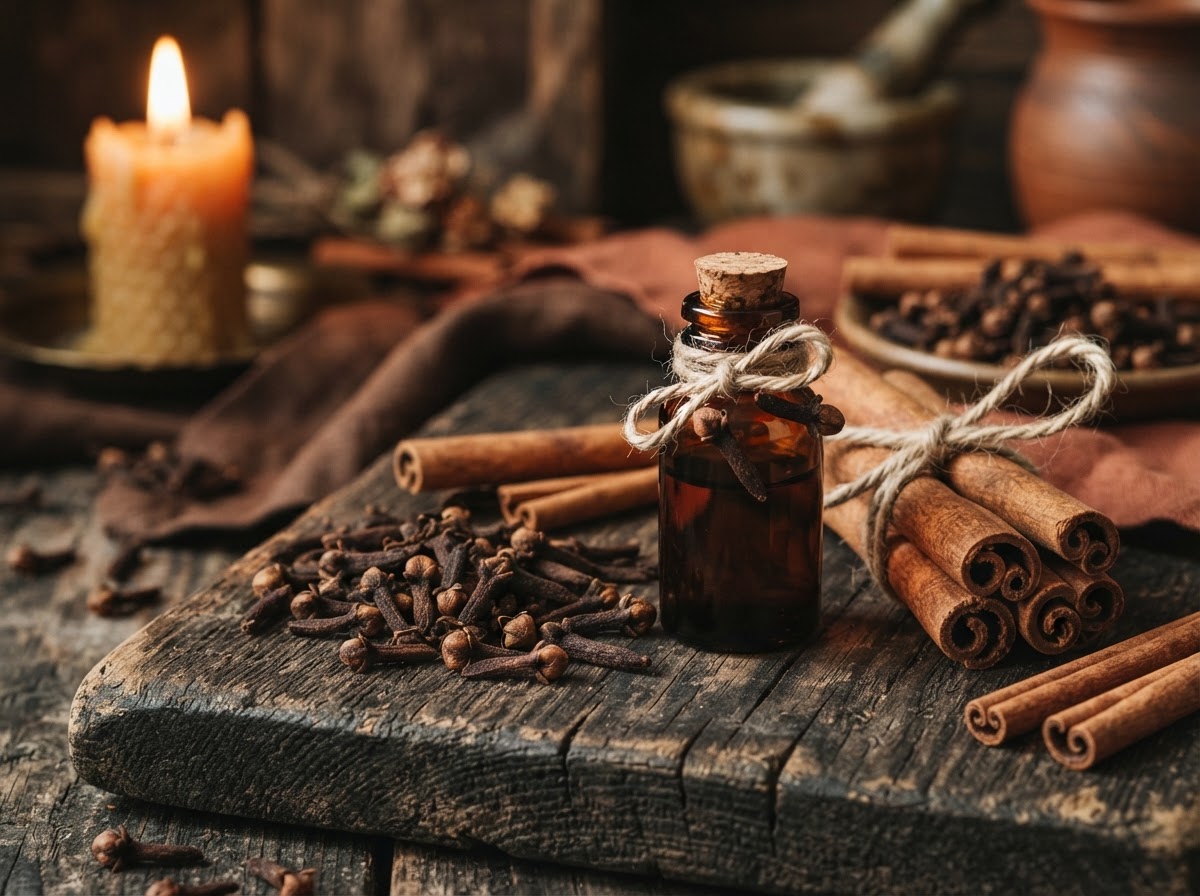
The clove tree, Syzygium aromaticum, is a tropical evergreen native to the Maluku Islands of Indonesia. For centuries, those islands held a near-monopoly on global clove production. Portuguese, Dutch, and Arab traders fought over access to the spice. Today, cultivation has spread widely. Indonesia remains the world's largest producer, followed by Madagascar, Tanzania (particularly Zanzibar), and Sri Lanka. Each growing region produces cloves with subtly different aromatic profiles, shaped by soil, humidity, and altitude. You can read a detailed comparison in our article on where cloves grow: Zanzibar, Madagascar, and Indonesia compared.
The part of the plant used matters enormously to the final oil. Clove bud oil, clove leaf oil, and clove stem oil are all commercially produced, and they are not interchangeable. Their chemical ratios differ in meaningful ways. We cover those differences thoroughly in our guide to clove oil grades, sourcing, and quality: bud vs. leaf vs. stem.
Harvesting: The First Step in Clove Oil Production
Clove flower buds are harvested before they open. This timing is critical. Once the bud opens into a full flower, the concentration of volatile aromatic compounds drops sharply. Experienced pickers watch for buds that have shifted from green to a rosy pink at the base. That color change signals peak eugenol content. It also means harvest windows are narrow, often just a few weeks per season.
Harvesting is done by hand. Workers climb the trees or use long bamboo poles to strip the buds from the branches. The buds are then spread on mats or concrete floors and sun-dried for several days. During drying, the buds darken to the familiar brown-black color most people recognize. Moisture content drops substantially, which concentrates the volatile compounds and makes the material suitable for storage and transport before distillation.
The Distillation Process: How Clove Oil Is Made
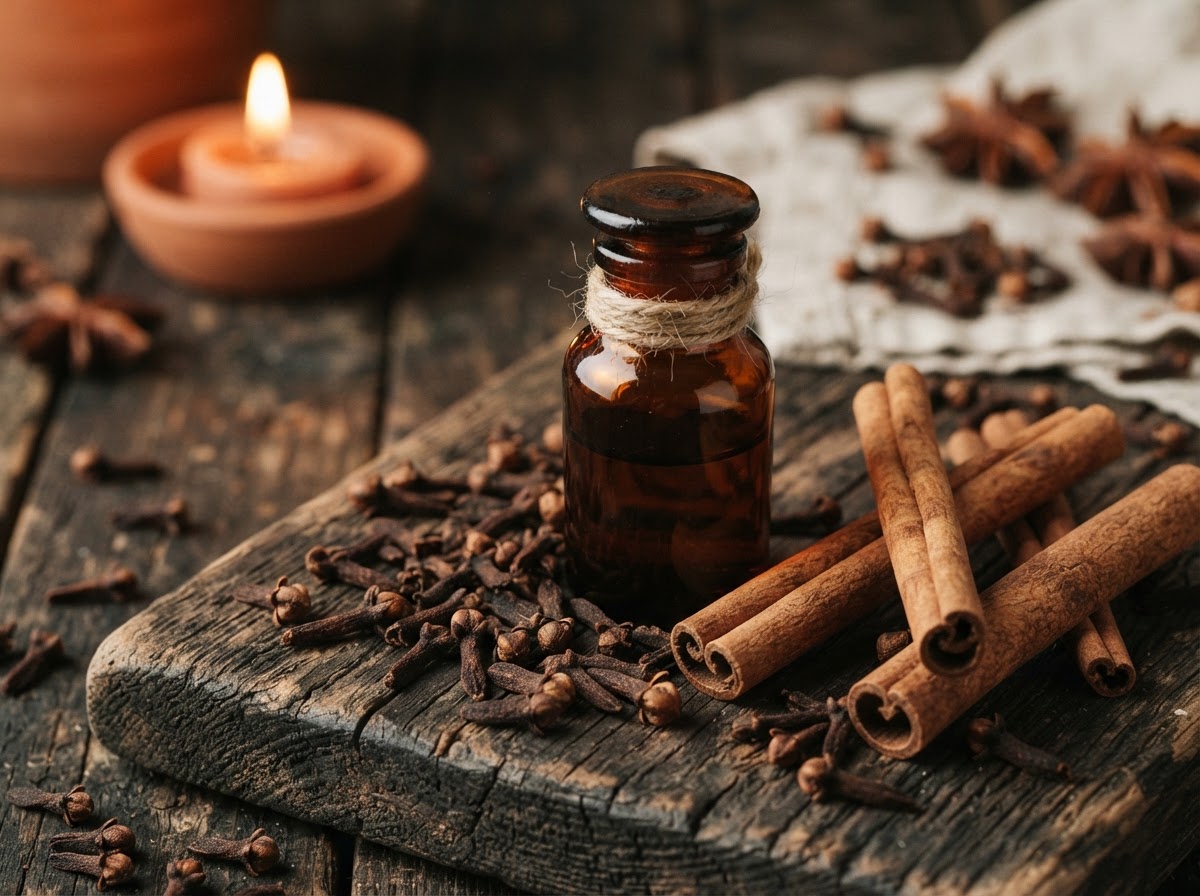
The dominant method used in clove oil production is steam distillation. It is an old technique, refined over centuries. The principle is straightforward: pass steam through plant material, vaporize the volatile aromatic compounds, then cool those vapors back into a liquid. The result is two layers in the collection vessel. Essential oil floats on top (or sinks, depending on its density relative to water). The water layer below, called hydrosol or floral water, carries its own faint aromatic signature and has its own uses.
How Steam Distillation Works, Step by Step
- Loading the still. Dried clove buds are packed into a large distillation vessel called a still or alembic. The buds may be lightly crushed beforehand to help release volatile compounds more efficiently, though practice varies by producer.
- Steam introduction. Steam is generated in a separate boiler and passed through the plant material. The heat and moisture cause the microscopic oil-containing glands in the bud tissue to rupture, releasing their volatile contents.
- Vapor travel. The mixed vapor of steam and aromatic compounds rises through the still and into a long coiled pipe called the condenser, which is cooled by cold water circulating around it.
- Condensation. As the vapor cools, it returns to liquid form. This liquid flows into a separator vessel called a Florentine flask.
- Separation. Clove bud oil is denser than water and settles below the hydrosol layer. (This is the opposite of many lighter essential oils, which float.) The oil is drawn off from the bottom of the separator.
- Filtration and bottling. The crude oil is filtered to remove any particulate matter, then transferred into amber glass bottles or stainless steel containers to protect it from light and oxidation.
Distillation time for clove buds typically runs between two and four hours, depending on equipment size and the quantity of material loaded. Rushing the process cuts yield and can skew the chemical ratios in the final oil.
Other Extraction Methods
Steam distillation is the standard, but it is not the only method. CO2 extraction uses supercritical carbon dioxide as a solvent, operating at lower temperatures and producing an extract with a slightly fuller aromatic profile. Some researchers observe that CO2 extracts may retain heat-sensitive compounds that are lost or altered during steam distillation. CO2-extracted clove oil is less common commercially and carries a higher price. Solvent extraction exists as well but is rarely used for clove oil destined for aromatherapy or cosmetic use.
Chemical Composition of Clove Bud Oil
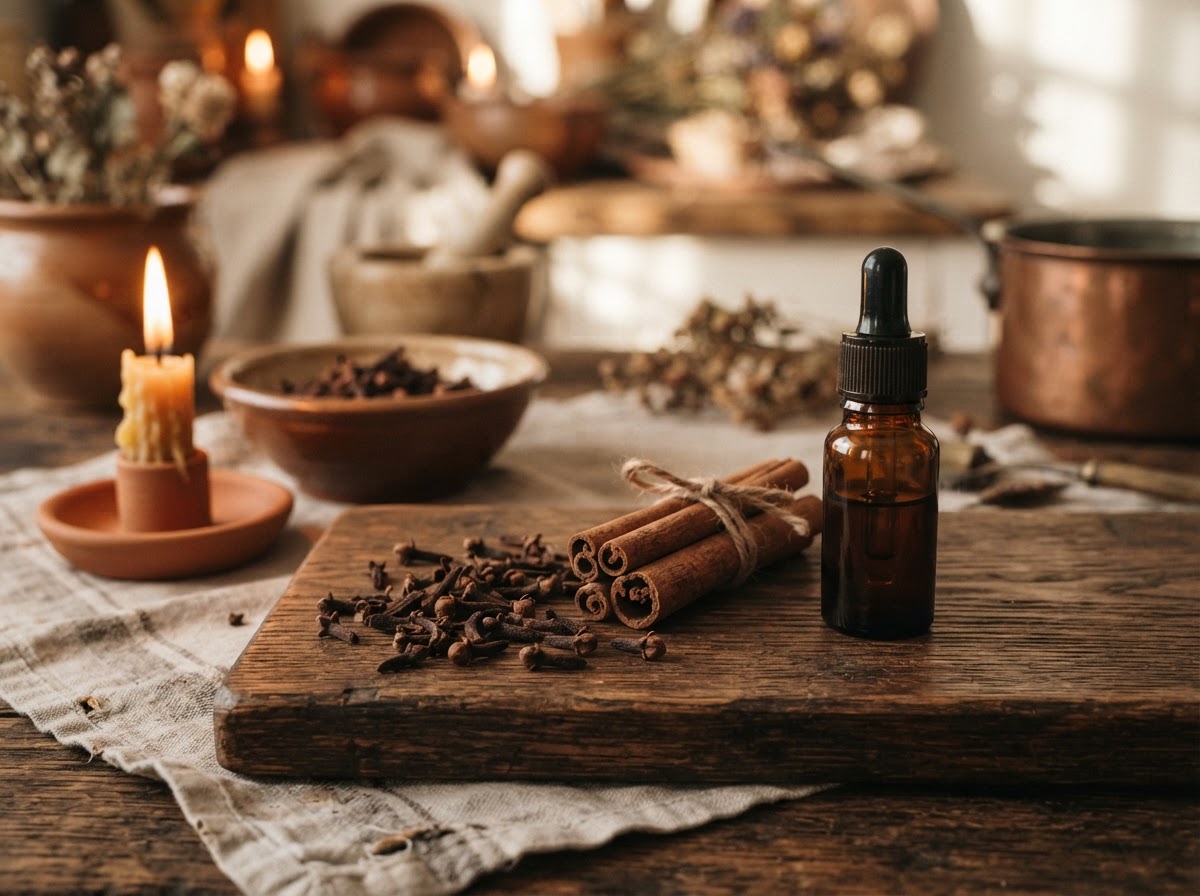
The chemistry of clove oil has been studied extensively, and its composition is reasonably well characterized. Clove bud oil is phenol-dominant, which places it in a category that requires particular attention to dilution and safety. Here is a general breakdown of its major constituents.
| Compound | Approximate Range | Chemical Class |
|---|---|---|
| Eugenol | 70 to 90% | Phenylpropanoid |
| Eugenyl acetate | 5 to 15% | Ester |
| Beta-caryophyllene | 5 to 12% | Sesquiterpene |
| Alpha-humulene | Trace to 2% | Sesquiterpene |
| Methyl eugenol | Trace amounts | Phenylpropanoid |
| Chavicol | Trace amounts | Phenylpropanoid |
These percentages shift depending on the plant part distilled, the growing region, harvest timing, and distillation conditions. A well-produced bud oil will consistently land in the upper portion of the eugenol range. Leaf oil, by contrast, often runs above 90% eugenol with very little eugenyl acetate, which gives it a harsher, less rounded scent profile.
Eugenol: The Defining Compound
Eugenol is responsible for clove oil's characteristic warm, spicy, slightly sweet aroma. It is also the compound behind most of the safety considerations and most of the research interest. Eugenol has a long history of use in dentistry as a component of temporary fillings and socket dressings, which gives some sense of how the compound interacts with biological tissue. Modern research has examined eugenol across a range of laboratory contexts. Studies suggest it exhibits notable activity in cell-based and animal models, though translating laboratory findings to human applications requires significant caution. Research is ongoing and no definitive clinical conclusions should be drawn from in-vitro results.
Beta-Caryophyllene: The Supporting Role
Beta-caryophyllene (BCP) appears in many essential oils, including black pepper and copaiba, but clove oil contains a meaningful amount. This sesquiterpene is the subject of growing research interest. Some studies suggest it may interact with cannabinoid receptors in the body, making it one of the few terpenes classified as a dietary cannabinoid in certain regulatory frameworks. Research in this area is still developing. BCP contributes a woody, slightly peppery note to clove oil's scent and may influence how the overall oil behaves in blends.
Eugenyl Acetate and Scent Roundness
The ester eugenyl acetate softens clove bud oil's sharp phenolic edge. Esters are generally considered among the gentler chemical classes in essential oil chemistry, and their presence in bud oil (compared to near-absence in leaf oil) is part of why experienced formulators often specify bud for aromatic and cosmetic applications. Eugenyl acetate contributes sweet, slightly fruity nuances that give quality bud oil its layered, complex character.
Safety Profile: What You Need to Know
Clove bud oil is one of the more potent essential oils available to consumers, and its safety profile reflects that. The high eugenol content places it among oils that require careful handling. Eugenol is a known dermal sensitizer at higher concentrations. The Research Institute for Fragrance Materials (RIFM) and the International Fragrance Association (IFRA) have issued guidance on eugenol limits in leave-on and rinse-off cosmetic applications. Those limits are worth reviewing if you formulate your own products.
Dilution Guidelines
Most professional guidelines suggest diluting clove bud oil to 0.5% or lower for leave-on skin products. For a simple point of reference, that is roughly one drop per teaspoon of carrier oil. Some sources allow slightly higher concentrations for rinse-off applications or diffusion, but starting conservatively is wise. Always conduct a patch test before applying any diluted clove oil blend to a larger area of skin. Apply a small amount to the inner forearm, cover it, and wait 24 hours before proceeding.
Contraindications and Cautions
- Children and infants: High-phenol oils, including clove, are generally considered inappropriate for use on or near young children. Consult a qualified healthcare provider before any use involving children.
- Pregnancy and nursing: Research on clove oil safety during pregnancy is insufficient to draw firm conclusions. Caution and professional guidance are advisable.
- Blood-thinning considerations: Eugenol has been observed in laboratory settings to have effects on platelet activity. People taking blood-thinning medications should consult their prescribing physician before using clove oil regularly, even aromatically.
- Mucous membranes: Even well-diluted clove oil can cause irritation if applied near sensitive mucosal tissue. Avoid contact with eyes and use restraint near the nose and mouth.
- Oxidation risk: Like all phenol-rich oils, clove oil oxidizes over time. Oxidized oils carry increased sensitization risk. Store in a tightly sealed amber or dark glass bottle, away from heat and light, and review shelf life guidance from your supplier.
Essential oils are concentrated botanical extracts. They are not substitutes for professional medical care. If you have a health concern, consult a qualified healthcare provider before incorporating essential oils into your routine.
Sourcing and Quality Indicators
The market for clove oil is not uniform. Quality ranges from excellent single-origin bud oil to adulterated or synthetically extended products sold at suspiciously low prices. Knowing what to look for protects your formulations and your investment.
Gas Chromatography / Mass Spectrometry Reports
A reputable supplier will provide a GC/MS (gas chromatography/mass spectrometry) report for each batch they sell. This report lists the chemical constituents and their percentages, giving you a verifiable fingerprint of the oil. For clove bud oil, look for eugenol in the 70 to 90% range and a meaningful eugenyl acetate presence. An oil showing eugenol above 92% with negligible eugenyl acetate may actually be leaf or stem oil, or it may have been adulterated. The report also reveals the presence of synthetic adulterants that do not naturally occur in clove oil.
Botanical and Geographic Transparency
Quality suppliers label their oil with the Latin name (Syzygium aromaticum), the plant part used (bud, leaf, or stem), the country of origin, and the extraction method. Vague labeling is a caution flag. If a supplier cannot tell you where their cloves were grown or which part of the plant was distilled, that opacity is worth noting.
Sensory Evaluation
You can learn a great deal from your nose. Good clove bud oil has warmth, sweetness, and a round, lingering quality. It is full-bodied without being harsh or acrid. If an oil smells thin, flat, or has a chemical edge that persists past the opening notes, those are signs worth investigating. Comparing a known-quality reference oil side by side with a new purchase builds your sensory vocabulary quickly.
Price as a Signal
Clove oil is not the most expensive essential oil on the market, but genuine bud oil produced through careful steam distillation from hand-harvested buds carries real production costs. Pricing well below the market average often reflects a quality compromise: leaf oil sold as bud oil, extended oil, or older oxidized stock. Our comparison guide on clove oil vs. synthetic spice fragrance: spotting the real walks through the specific signs to look for when evaluating a new supplier.
From Ancient Trade Good to Modern Bottle
There is something grounding about understanding the full arc of production. A clove bud is picked at exactly the right moment by a worker who knows the tree. It dries in equatorial sun. It travels to a distillery, where steam carries its volatile chemistry through copper coils and into a glass vessel. A GC/MS technician reads the chemical report. A supplier bottles the oil in amber glass. It arrives on your shelf.
That chain of decisions, from harvest timing to distillation duration to storage conditions, shapes everything you experience when you open the bottle. The more you know about how clove oil is made, the more confidently you can choose well and use it wisely.