DIY Spiced Beard Oil with Clove: A Woodsy Grooming Blend
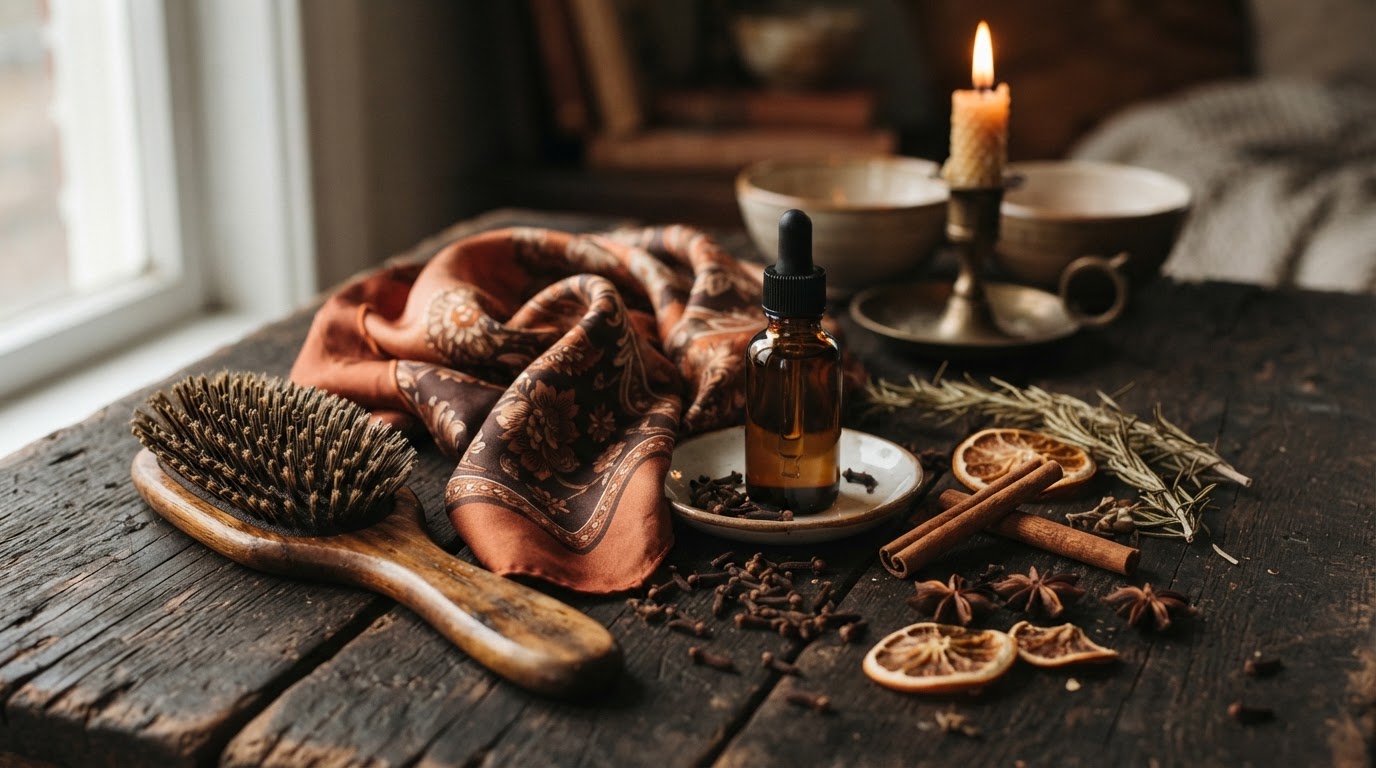
There is something deeply satisfying about a grooming ritual built from scratch. A small amber bottle, a handful of carrier oils, a few drops of something warm and resinous from the spice trade. This clove beard oil recipe draws on that tradition. It is grounding, woodsy, and carries the kind of warmth that feels intentional rather than off-the-shelf.
Clove essential oil has been prized in spice markets for centuries, prized for its bold, complex scent profile. In a diy beard oil, it plays a supporting role rather than the lead. The goal is balance: a spiced grooming blend that smells like a well-kept man who knows his way around a cedar forest, not like a holiday candle. Getting there requires careful dilution and a few good carrier oils that work with the skin beneath the beard.
This guide walks through everything: the full ingredient list, step-by-step instructions, safety considerations, and a few variations to make the blend your own.
Before You Begin: A Note on Clove Essential Oil
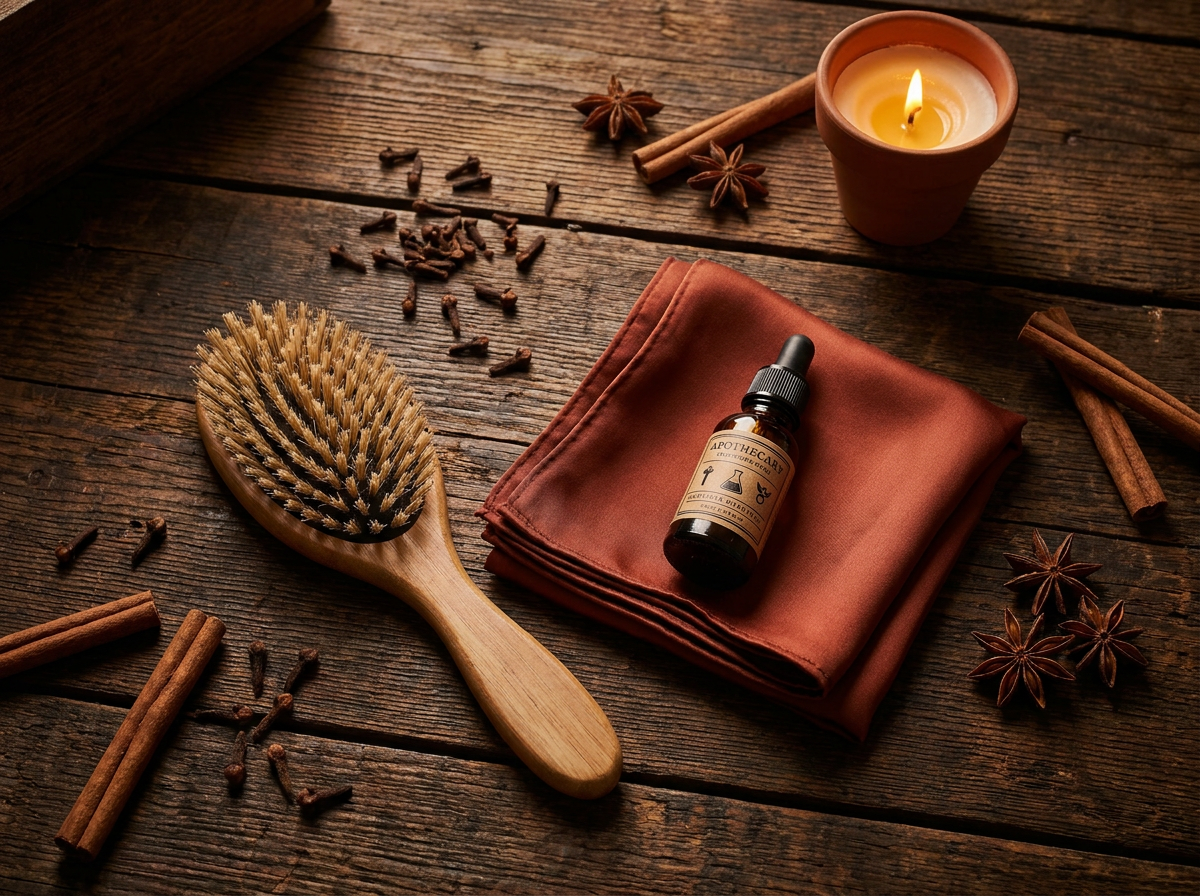
Clove essential oil is one of the more potent oils in a home blender's cabinet. It is rich in eugenol, a compound that gives clove its characteristic warm, slightly numbing quality. That potency is exactly why it shines in a clove beard oil blend. It is also why dilution is non-negotiable.
If you are new to working with this oil, the article on blending with clove oil: the complete DIY and spice pairing is worth reading first. It covers carrier oil compatibility, scent layering, and the general principles that make clove behave well in a blend rather than overwhelming everything around it.
For those curious about how clove compares to its spice-cabinet neighbor, this piece on clove oil vs. cinnamon oil: comparing the two kitchen spice oils lays out the key differences in a way that informs better blending decisions.
Recipe Overview
- Difficulty: Beginner-friendly
- Prep time: 10 to 15 minutes
- Yield: Approximately 1 fluid ounce (30 mL) of finished beard oil
- Shelf life: 6 to 12 months with proper storage
Ingredients
Carrier Oil Base
| Ingredient | Amount | Purpose |
|---|---|---|
| Jojoba oil | 15 mL (1 tablespoon) | Lightweight base, closely mimics skin sebum |
| Argan oil | 10 mL (2 teaspoons) | Adds softness and a slight nutty warmth to the scent |
| Sweet almond oil | 5 mL (1 teaspoon) | Slip and glide for easier beard combing |
Essential Oil Blend
| Essential Oil | Drops | Scent Role |
|---|---|---|
| Clove bud essential oil | 3 drops | Warm spice, base-middle note, anchors the blend |
| Cedarwood (Atlas or Virginian) | 6 drops | Woodsy, dry, provides the earthy backbone |
| Vetiver essential oil | 2 drops | Smoky, deep base note, extends longevity on skin |
| Sweet orange essential oil | 4 drops | Bright top note, lifts the heavier spice elements |
Total essential oil concentration: 15 drops in 30 mL of carrier oil, which works out to approximately 2.5%. This falls within a safe facial skin dilution range for most adults.
Step-by-Step Instructions
-
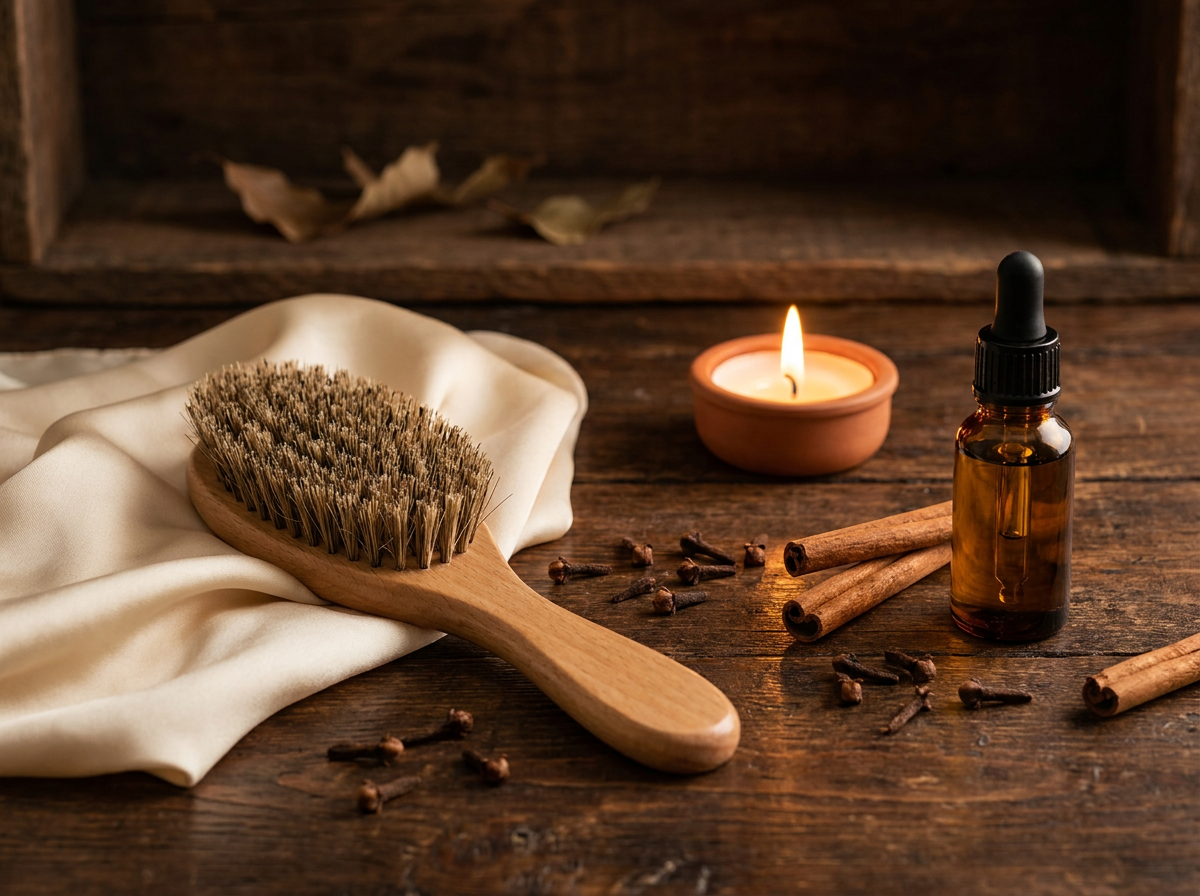
Gather your equipment. You will need a 1-ounce (30 mL) amber glass dropper bottle, a small glass measuring cup or beaker, a glass stirring rod or small spoon, and a fine funnel if your bottle neck is narrow. Amber glass protects the oils from light degradation. Avoid plastic containers for essential oil blends.
-
Measure your carrier oils. Pour the jojoba oil, argan oil, and sweet almond oil into your glass measuring cup. Combine them gently. There is no need to heat anything. These oils blend readily at room temperature.
-
Add the essential oils in order. Start with vetiver (heaviest, slowest to disperse), then cedarwood, then clove bud, then sweet orange last. Adding from heaviest to lightest helps the blend come together more evenly. Count drops carefully. Clove especially should be measured precisely.
-
Stir slowly. Use your glass rod to stir the blend gently for 30 to 60 seconds. Avoid vigorous shaking at this stage, which can introduce air bubbles and affect your drop count if you are still measuring.
-
Transfer to your dropper bottle. Use the funnel to pour the finished blend into your amber bottle. Cap it tightly.
-
Label immediately. Write the date, the blend name, and the dilution percentage on a label. This is a habit worth building. Unlabeled bottles are a safety risk, especially in a household with children.
-
Roll, do not shake. Before each use, roll the bottle gently between your palms for 10 seconds. This warms the oil slightly and redistributes the essential oils without oxidizing them.
How to Use
Dispense 3 to 5 drops into your palm, depending on beard length. Rub your hands together lightly, then work the oil from the skin outward through the beard. Follow with a beard comb or boar bristle brush. Morning application, ideally after a warm shower when the beard is clean and slightly damp, tends to give the best distribution.
The clove beard oil scent will be noticeable but not overpowering at this dilution. The sweet orange top note fades within the first hour, leaving the warmer cedar and clove dry-down to carry through the day.
Safety Warnings and Contraindications
Please read this section before making or using this blend.
Patch Testing
Before applying any new diy beard oil to your face, perform a patch test. Apply 2 to 3 drops of the finished blend to the inside of your forearm. Cover with a bandage and wait 24 hours. If you notice redness, itching, or irritation, do not use the blend on your face. Discontinue use and, if the reaction is significant, consult a qualified healthcare provider.
Dilution
This recipe is formulated at approximately 2.5% essential oil concentration. Do not increase the number of clove bud drops beyond 3 in a 30 mL batch. Clove essential oil is a known sensitizer at higher concentrations, particularly on facial skin, which is more delicate than the skin on arms or legs. More is not better here.
Who Should Avoid This Blend
- Individuals with known sensitivities to eugenol or clove
- Individuals with known nut sensitivities (sweet almond oil is a tree nut derivative; substitute with sunflower oil if needed)
- Anyone whose healthcare provider has advised against topical essential oil use
- Children (this recipe is formulated for adult use only)
General Guidance
Essential oils are not substitutes for professional medical guidance. If you have any skin concerns or are taking medications that may affect skin sensitivity, please consult a qualified healthcare provider before adding new topical products to your routine.
Eye Contact
Keep this blend away from the eyes. Clove oil is particularly irritating to mucous membranes. If eye contact occurs, flush immediately with plain water for several minutes.
Storage Instructions and Shelf Life
Store your spiced grooming blend in a cool, dark location away from direct sunlight and heat sources. A bathroom cabinet shelf works, though humidity can shorten shelf life. A drawer or a dedicated grooming box is preferable.
Jojoba oil, which is technically a liquid wax, is the most shelf-stable carrier in this recipe and acts as a mild preservative for the blend. Argan oil and sweet almond oil are more prone to going rancid, which is what limits the overall shelf life.
- Expected shelf life: 6 to 12 months
- Signs of degradation: Rancid, crayon-like, or off smell; cloudiness in oils that were previously clear; changes in color
- Refrigeration: Optional but extends shelf life. Allow the bottle to come to room temperature before use.
- Batch size recommendation: Make small batches of 1 to 2 ounces. Fresher oil performs better and you waste less if you decide to adjust the formula.
Variations and Substitutions
For a Smokier, Darker Blend
Replace the sweet orange drops with 4 drops of black spruce or frankincense. This shifts the blend away from any brightness and deepens the resinous, forest-floor quality. It suits colder months well.
For a Lighter, Fresher Profile
Reduce the cedarwood to 4 drops and add 4 drops of bergamot (bergapten-free for skin safety). This keeps the clove warmth but lifts the overall impression considerably. A good option for warmer-weather wear.
Carrier Oil Substitutions
- No sweet almond oil: Use sunflower oil or grapeseed oil in equal measure
- No argan oil: Marula oil or rosehip oil are reasonable alternatives at the same volume
- Simplified base: Use 30 mL of jojoba oil alone. It is a reliable, forgiving carrier that works well for all beard types.
Clove Leaf vs. Clove Bud
This recipe specifies clove bud essential oil, not clove leaf. Clove leaf oil has a higher eugenol content and is more likely to cause skin sensitization at equivalent concentrations. For a diy beard oil applied to facial skin, bud is the gentler and more appropriate choice. For a deeper look at how different clove-adjacent spice oils compare in blending contexts, the guide on 10 clove oil blends: citrus, vanilla, and woodsy pairings offers plenty of inspiration for adapting this formula.
A Few Notes on Sourcing
The quality of a diy beard oil depends heavily on the quality of its inputs. For clove bud essential oil, look for a supplier that provides a gas chromatography and mass spectrometry (GC/MS) report for each batch. This tells you the actual eugenol percentage and confirms the oil has not been adulterated with synthetic compounds or lower-grade clove leaf or stem fractions.
Country of origin matters too. Indonesian clove bud oil, particularly from Maluku Province, is generally considered a benchmark for quality. Madagascan clove bud is also well-regarded. A good supplier will be transparent about origin.
For carrier oils, cold-pressed is preferable to refined. Cold-pressed jojoba and argan retain more of their natural characteristics, which translates to a better feel on skin and a more cohesive finished blend.
The Ritual of It
A morning beard oil ritual should take about two minutes. It should smell good and feel good, and it should signal to your brain that the day is starting with some intention. This spiced grooming blend earns a permanent place in that routine because it is distinctive without being loud. The clove is present but not shouting. The cedar does the heavy lifting on longevity. The orange keeps things from getting too heavy-handed.
Make a small batch, test it for a week, and then adjust from there. Grooming blends are personal. The formula above is a starting point, built to be good on its own and to respond well to thoughtful changes.