Best Clove Oil Sizes: Which Bottle Should You Order First?
You've decided to add clove oil to your home. Now you're staring at a product listing that offers the same oil in a 10 ml dropper, a 4-ounce amber bottle, a 16-ounce jug, and a full liter. Which one makes sense for a first purchase? Choosing the wrong size wastes money, invites spoilage, and sometimes leaves you stuck with an oil you don't love in a quantity you can't use. This guide walks through every major clove oil size, explains what to look for before you spend a dollar, and flags the sourcing details that separate a quality bottle from a disappointing one.
What to Look for Before You Compare Sizes
Size is the last thing you should evaluate. Quality comes first. A large bottle of mediocre oil is a bad deal at any price.
Grade and Plant Part
Clove oil comes from three parts of the plant: the bud, the leaf, and the stem. These are not interchangeable grades. Bud oil is the most prized for home use, carrying that rich, sweet-spicy aroma most people associate with cloves. Leaf oil is sharper and more phenolic. Stem oil sits somewhere in between. A product listing that simply says "clove oil" without specifying the plant part is already giving you less information than you deserve. For a deeper look at how grades are distinguished, see our guide to clove oil grades, sourcing, and quality: bud vs. leaf vs. stem.
Eugenol Content
The signature compound behind clove oil's characteristic scent and many of its traditional uses is eugenol. High-quality bud oil typically contains 70 to 90 percent eugenol. Reputable sellers publish gas chromatography (GC) or GC-MS reports confirming this range. If a brand makes no mention of eugenol content and offers no testing documentation, that is worth noting before you buy. You can explore the chemistry in more detail in our article on what is eugenol: the signature compound behind clove's aroma.
Packaging
Clove oil is high in phenols, which means it can degrade plastic over time and accelerate its own oxidation when exposed to light. Amber or cobalt blue glass is the standard for good reason. A dropper insert or orifice reducer on smaller bottles helps control how much oil you dispense, which matters both for safety and economy. Any clove oil sold in clear plastic is a red flag regardless of the marketing copy on the label.
Country of Origin
Indonesia (particularly Maluku and Sumatra) and Madagascar are the primary sourcing regions for quality clove oil. Sri Lanka also produces respected bud oil. A product that lists no country of origin or says only "sourced globally" is telling you very little. Country of origin is not a guarantee of quality by itself, but it is a data point that credible brands are happy to share.
The Size Lineup: A Practical Breakdown
10 ml (0.33 oz): The Trial Bottle
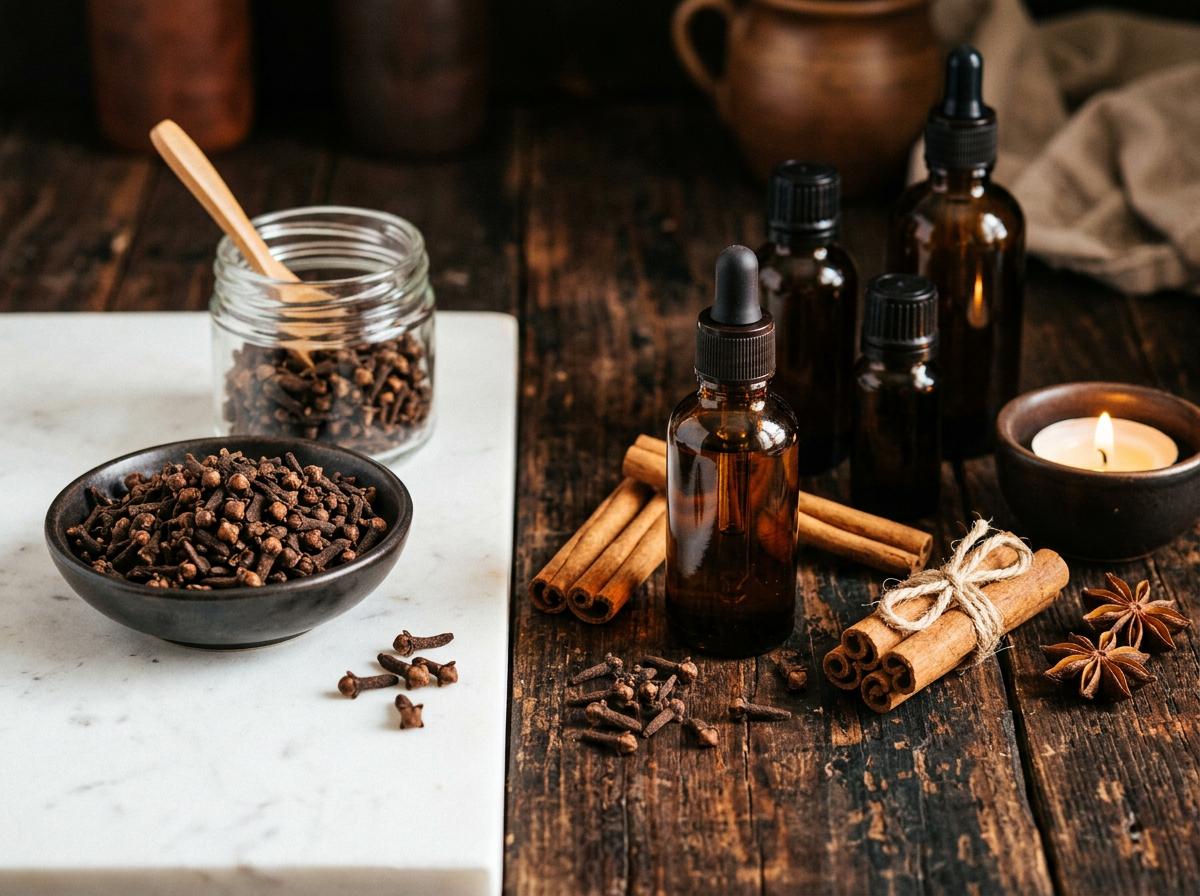
This is the right size if you have never used clove oil before. At full concentration, clove oil is potent. A 10 ml bottle gives you enough to test the aroma, experiment with a few diffuser blends, and make a small diluted roller before committing to a larger purchase. You will typically spend between four and ten dollars at this size from a reputable brand.
The downside is cost per ounce. You pay a premium for the small volume. If you already know you like the oil and use it regularly in diffuser blends or DIY projects, the 10 ml becomes an expensive habit quickly.
Best for: First-time buyers, travelers, gift sets, and sampling a new brand.
1 oz (30 ml): The Sweet Spot for Most Home Users
A 1-ounce bottle is where most home users find the best balance of price, freshness, and practicality. You get enough oil to last several months of regular diffusing without worrying that it will oxidize before you finish it. Prices from quality brands typically range from twelve to twenty-five dollars depending on grade and sourcing transparency.
Look for a built-in orifice reducer at this size. It slows dispensing, reduces spills, and helps you count drops accurately when following a dilution guideline.
Best for: Regular home diffusing, small-batch DIY candles or potpourri blends, and anyone building a personal oil collection.
4 oz (120 ml): The Committed Hobbyist Size
If you make your own candles, soap, or body products as a hobby, a 4-ounce bottle starts to make economic sense. The cost per ounce drops noticeably compared to the 1-ounce size, and a quality 4-ounce bottle stored properly in a cool, dark space will stay fresh for twelve to eighteen months.
At this size, packaging quality matters more. The bottle should still be amber glass with a tight cap. Some brands at this size switch to aluminum bottles, which is also acceptable. Avoid any 4-ounce offering that arrives in plastic.
Expect to spend twenty to fifty dollars depending on quality tier and brand. The gap between a budget 4-ounce and a well-sourced 4-ounce can be significant in aroma quality and eugenol content.
Best for: DIY candle makers, soap crafters, spice-blend hobbyists, and households that diffuse clove oil daily through autumn and winter.
16 oz (1 lb / 473 ml): The Small-Batch Producer Size
A 16-ounce bottle is more oil than most individual households can realistically use before oxidation becomes a concern. At this volume, the math only works if you are making products at scale: seasonal candle batches, a small soap business, holiday gift sets, or shared purchasing with a group of crafters.
Storage becomes a real consideration here. Keep the bottle sealed, away from heat and light, and consider decanting into smaller working bottles so the main supply is opened as infrequently as possible. Prices range from forty to ninety dollars at this size, with bulk-sourced options occasionally lower.
Best for: Small craft businesses, high-volume seasonal makers, and cooperative purchasing groups.
32 oz and Above: True Bulk Territory
At a liter or more, you are in wholesale and bulk purchasing territory. Pricing structures change at this level, often dropping significantly per ounce when you meet minimum order quantities. If you are considering bulk purchasing, it is worth understanding how pricing tiers work before you order. Our guide to wholesale clove oil: bulk sizes, pricing tiers, and sourcing covers this in full detail.
Best for: Cosmetic and candle manufacturers, essential oil resellers, and large-scale herbal product producers.
Key Features to Compare Across Brands
| Feature | What to Look For | Red Flag |
|---|---|---|
| Plant part | "Bud" clearly stated | Just says "clove oil" with no specification |
| Country of origin | Indonesia, Madagascar, or Sri Lanka | No origin listed |
| Testing documentation | GC-MS report available on request or online | No testing information anywhere |
| Packaging | Amber or cobalt glass, tight cap, orifice reducer | Clear plastic bottle |
| Purity statement | "100% pure, undiluted" with no added carriers | "Blended" or "fragrance oil" language |
| Expiration or batch date | Batch number or best-by date visible | No dating information on the bottle |
Red Flags to Avoid
The essential oil market has more than its share of misleading labeling. Here are the most common problems to watch for when shopping clove oil.
- "Fragrance oil" mislabeling. Fragrance oils are synthetic scent compounds, not distilled plant oils. They smell similar but perform differently and are not appropriate for applications requiring pure essential oil. Read the label carefully.
- Unusually low prices on large sizes. Quality clove bud oil from traceable sources has a real cost floor. A 4-ounce bottle priced at five dollars is almost certainly adulterated, diluted with a carrier, or sourced from lower-grade raw material.
- No safety information. Reputable brands include dilution guidelines and contraindication notes (avoid during pregnancy, keep away from children, do not apply undiluted to skin). A brand that provides no safety information at all is not investing in customer education.
- Vague or exaggerated marketing claims. If a brand promises the oil will solve specific health problems or makes dramatic claims about its potency, that is both a regulatory concern and a signal that the marketing is not grounded in honest product knowledge.
- Plastic packaging at any size. As noted above, phenol-rich oils and plastic are a poor combination. No legitimate essential oil brand uses plastic for pure clove oil.
Top Picks at Different Price Points
Rather than ranking specific brands (which can change stock, sourcing, and quality over time), here is a framework for evaluating what you find in the market at three general price tiers.
Budget Tier (Under $15 for 1 oz)
Budget-tier clove oils can be perfectly acceptable if they specify bud oil, list country of origin, and offer some testing documentation. At this price point, you may be getting leaf oil labeled ambiguously, or bud oil from a less traceable supply chain. Ask the brand directly if GC-MS results are available. If they respond promptly with documentation, the price can represent genuine value.
Mid-Range Tier ($15 to $30 for 1 oz)
This is where most of the well-regarded independent essential oil brands operate. You will generally find clearer sourcing information, accessible batch testing, and thoughtful packaging. Many small-batch and single-origin bud oils sit in this range. It is the most reliable tier for home users who want quality without wholesale pricing.
Premium Tier (Above $30 for 1 oz)
Premium pricing on a 1-ounce clove oil warrants scrutiny. Some premium prices reflect genuine single-origin, small-batch sourcing with full supply chain transparency. Others reflect branding more than product quality. Ask the same questions you would at any tier: What is the plant part? Where was it distilled? Is there a GC-MS report? A high price alone is not a quality indicator.
Where to Buy
Direct-to-consumer websites from established essential oil brands are generally the most reliable source. You can read sourcing stories, access testing documentation, and contact someone with real product knowledge if you have questions. Marketplaces like Amazon carry both excellent and questionable options side by side, so the brand vetting process described above matters even more in that environment.
Specialty natural food stores and co-ops often carry a curated selection and can be a good place to smell before you buy, which is harder to do online. Craft supply stores sometimes carry clove oil, though they skew toward fragrance oils rather than pure essential oils, so read labels carefully in that channel.
For anyone moving toward larger quantities, working directly with a supplier rather than through a retail intermediary will produce better pricing and often better sourcing information. That transition from retail to wholesale is worth planning deliberately once your usage volume supports it.
The Short Answer
If this is your first bottle of clove oil, buy a 1-ounce size from a brand that clearly states "bud oil," names its country of origin, and can point you to testing documentation. That single purchase tells you everything you need to know before committing to larger quantities. From there, your usage patterns will tell you whether a 4-ounce refill, a seasonal bulk order, or simply restocking 1-ounce bottles is the right long-term approach for your home and projects.